Apply to be a vendor in the DesignThinkers marketplace

Applications are open for small businesses selling Canadian-made, design-forward goods to be a part of the DesignThinkers marketplace at the conference in Toronto on October 1 and 2, 2025.

The marketplace is an opportunity to connect with 2,000 attendees and the RGD’s wider audience on social media and other digital channels.

Vendor spaces are 8-feet wide x 6-feet deep. All vendors receive a 6-foot table, chair, access to free Wi-Fi and one transferrable exhibitor badge.

Apply by Monday, August 25.

Associate RGD scholarship program for DesignThinkers Toronto is open

Our 2025 DesignThinkers Toronto scholarships are generously provided by: Fusion, Pound & Grain, Cinnamon Toast, Him & Her Inc., Razor, Davis Agency, Pixels and Pencils and Paul Jen Communications Inc.

Scholarships recognize outstanding emerging designers and offer a unique platform to showcase your creativity to the broader design community. This is your opportunity to gain exposure, connect with leading creatives and be part of the DesignThinkers conference.

Up to eight scholarship recipients will receive free registration to DesignThinkers Toronto 2025 and $500 in cash to help cover travel, accommodation and other expenses. This year, recipients and their work will also be showcased on the main stage screen during conference breaks. Entrants can win up to 2 cash prizes.

Eligibility criteria

To apply, you must be an Associate RGD Member in good standing at the time of the application deadline. Associate RGD Members have eight or fewer years of professional experience and graduation from a recognized post-secondary program (scan of transcript or diploma required). Review all the benefits of RGD Membership here.

If you received a DesignThinkers Vancouver 2025 scholarship, you are not eligible to enter for Toronto.

How to apply

To be considered, submit:

  • One design project from your portfolio (can be personal, school or professional work)*
  • A rationale for the project describing the context, process and solution*
  • Responses to the following questions:
    • Why do you wish to attend DesignThinkers?
    • What do you hope to gain from the experience?

* If the project submitted is professional work, the information provided will be emailed to you and can be used for one of three case studies in an RGD Certification application. Find out about Certification.

Selection criteria

Applicants will be evaluated on the quality of the work and thoughtfulness of their responses.

Deadline to apply

11:59 PM PT on Friday, August 15, 2025. Submit your application here.

We’re going to Creative Director boot camp with Dominic Prevost

A good CD is able to riff on a given idea and help make it better–whether it’s by asking really pointed questions, building up on the idea, shifting the focus, ensuring the needs of the brief are met, etc.

Dominic Prevost is Group Creative Director at Resonance. Ahead of his workshop on becoming a stronger creative director, we asked him a few questions about why a workshop like this is so valuable, what qualities make a great CD and more.

We’re excited to have you back at DesignThinkers in Vancouver to lead another workshop! This year’s is all about acquiring the skills needed to become a creative director. What made you want to do a deep dive on this topic?

True story: I spent the bulk of the DesignThinkers Toronto delegate party interviewing attendees and asking them point-blank: “What kind of topic would you want covered?” From students to seniors, and even recruiters, one topic rose to the surface: how to prep creatives on what being a CD really is.

Why? In design & ad school, they’ll teach you to be a good creative, and you’ll polish those skills as you climb the ranks, until you become a CD and 80% of what you’ve learned doesn’t apply anymore. I can’t think of any other job that does that. The purpose of my workshop is to get aspiring CDs ready for the big transition – even if it comes years down the line–and get a taste of the realities of being a creative leader. Spoiler alert: it’s about so much more than making good creative work.

As a design educator yourself, what do you think is missing from current design and ad programs that would help designers make the eventual transition to more senior leadership roles?

I’d put even more emphasis on active listening, and critiquing/elevating the work of fellow students. A good CD is able to riff on a given idea and help make it better–whether it’s by asking really pointed questions, building up on the idea, shifting the focus, ensuring the needs of the brief are met, etc. A student who is able to listen, analyse then give feedback that adds value to any project in the classroom will get a huge advantage in the workplace. The same goes for receiving feedback too.

Can you share about an experience that shaped your understanding of what it means to be a great creative director? Whether it was when you were a junior staff, or now as a CD.

Being a CD is about more than managing the creative output of an organization. My big ‘ah-ha’ moment came when I realized I couldn’t turn to my leaders to deal with issues: it was up to me to lead the team towards change. It takes a strong vision, a lot of stamina and patience to stay the course and earn/maintain the team’s trust. I wear many hats as a CD, from janitor, to gatekeeper, to teacher, to therapist, to cheerleader–whatever my team needs me to be to thrive.

What is a skill that sets a good creative director apart from a great one?

To me, it’s an even split between stamina and curiosity. Stamina because meaningful change takes time, hiring the perfect team and unlocking their potential takes time, building a strong relationship with a client takes time, changing the culture of an organization takes time and–most importantly–finding your groove as a leader takes time. Curiosity because our industry is constantly changing, and the best creative solutions aren’t always found by endlessly scrolling Instagram, LinkedIn, Pinterest or Reddit. We have to stay open and curious to the world, soak everything in: books, music, news, nature, a random podcast about economics… everything has the power to inspire… even that weird doodle you did while FaceTiming your mom might lead you to something amazing.

You’ve noted that this workshop is suitable for current and aspiring creative directors. What can attendees expect from this session? Give us your best pitch for why attendees should join you!

Without spoiling anything, what I can promise is a fast-paced, hands-on workshop that’ll put you in the driver’s seat from slide three. You’ll learn to embrace discomfort, own your decisions (I’ve designed a ‘choose your own adventure’ game with some choice dilemmas for you to tackle), craft a vision for your team, then I’ll top it up with 7 lessons I learned the hard way so you don’t have to. I’m super excited for this workshop, and incredibly grateful for all my beta testers (from students, coworkers, to working CDs) who helped make it as good as can be. See you all in May!

Sign up for Dominic’s workshop, Creative Direction Clinic, happening May 13 at 3:15 p.m., when you register for the conference, or through the attendee portal.

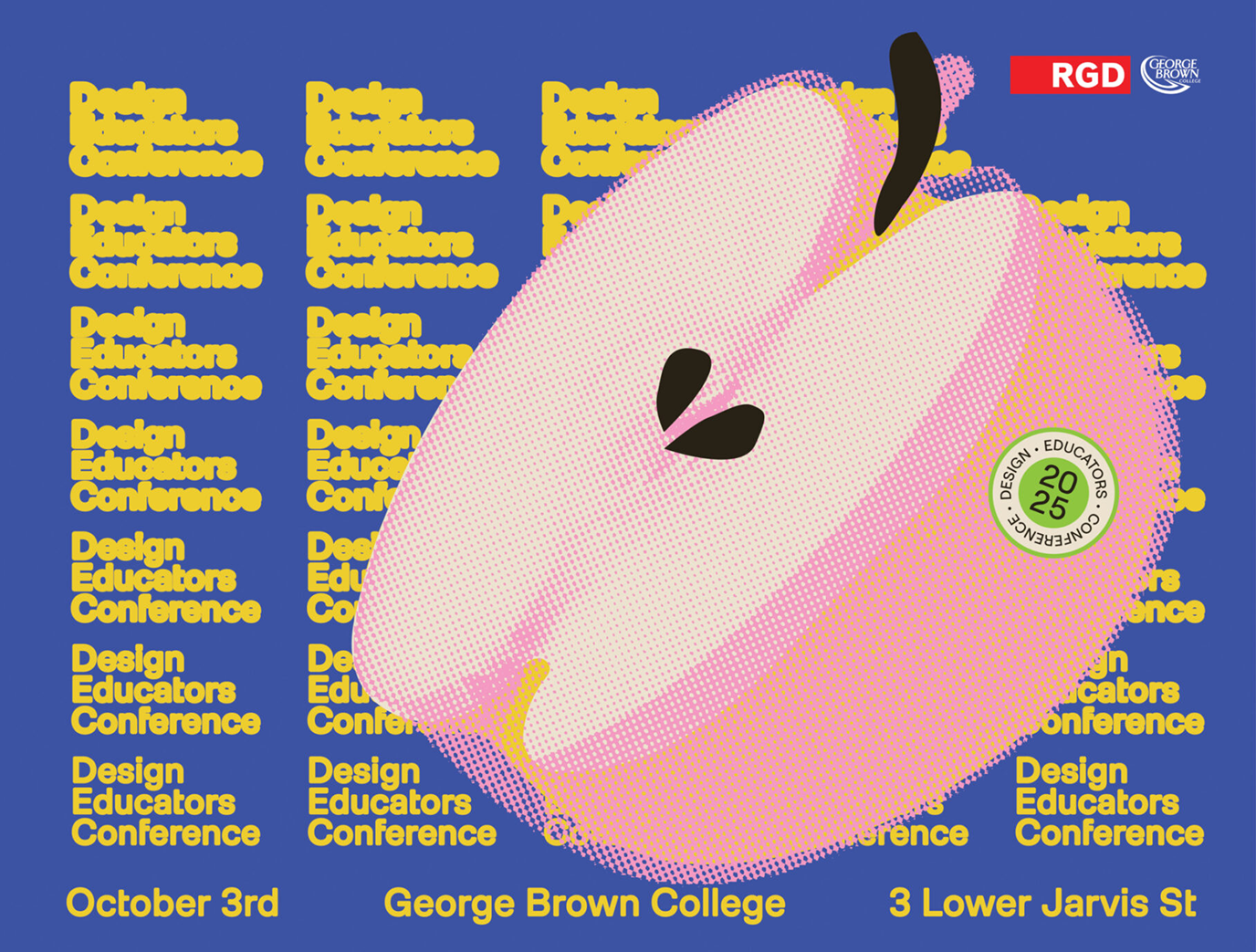
Design Educators Conference is October 3 in Toronto

The Design Educators Conference is coming to Toronto on Friday, October 3, following DesignThinkers in Toronto. Educators from around the world are invited to attend to discuss the future of design education.

Organized in partnership with George Brown College, the 2025 conference theme is ShiftShaping in design education and practice.

Registration is open. Early Bird pricing ends September 12.


Keynote speakers for the conference:

Opening Keynote by Danah Abdulla:

Danah Abdulla is a designer, researcher and educator whose work explores new narratives and practices that challenge traditional disciplinary boundaries in design. She is a Reader in Anti/Post/Decolonial Histories, Theories, Praxes at the Decolonising the Arts Institute, University of the Arts London. Danah is the author of Designerly Ways of Knowing and Design Otherwise: Transforming Design Education in the Arab Region, and is a founding member of the Decolonising Design platform. She also founded Kalimat Magazine, a publication dedicated to Arab thought and culture. Danah will also be speaking at DesignThinkers Toronto.

Closing Keynote by Lesley-Ann Noel:

Lesley-Ann Noel is a designer, researcher and author of Design Social Change, known for her equity-centred approach to design. Now Dean of Design at OCAD University, her work focuses on inclusive, community-led practices in education, public health and social innovation.


If you have questions, email [email protected].

10 emerging designers attend DesignThinkers Vancouver free

With the support of our sponsors, the RGD has awarded 10 cash scholarships and free registration to emerging designers to attend DesignThinkers Vancouver this May 13-14.

Student RGDs and Associate RGDs were invited to submit a 30-second to 1-minute video expressing their enthusiasm for DesignThinkers Vancouver and why they wished to attend the conference.

Each of our sponsors selected a winner and provided $500 to help cover costs to attend.

Thank you to this year’s DesignThinkers Vancouver Scholarship Sponsors: Becoming Design Office, CT Studio, OK DAVE, One23West, Pendo, PS&Co., Pound & Grain, Resonance, Rethink and Will.

Below, we share their winning work.

Emily Norris-Jones Student RGD

Sponsor: CT Studio


Jerry Kambashi Student RGD

Sponsor: OK Dave


Kara Barnett Student RGD

Sponsor: Becoming Design Office


Kristi Zuo Associate RGD

Sponsor: Pendo


Linden Wheeler Student RGD

Sponsor: One23West


Mia Antinori Student RGD

Sponsor: Will


Priya Shukle Student RGD

Sponsor: PS&Co


Rachel Xu Associate RGD

Sponsor: Resonance


Richard Lau Student RGD

Sponsor: Rethink


Sid Watson Associate RGD

Sponsor: Pound & Grain


The Scholarship program for DesignThinkers 2025 in Toronto will be announced in August.

If you would like to find out more about becoming a sponsor, email [email protected].

Designing for a Mobile-First World: Tips from a top digital marketing agency

Presented by Elite Digital

The digital landscape has transformed quickly. With mobile usage skyrocketing and more people browsing on their phones than desktops, the message is clear: if your website isn’t mobile-first, it’s already falling behind. As a top digital marketing agency trusted by brands across Canada, Elite Digital knows what it takes to design intuitive, responsive experiences that shine on every
screen.

Let’s explore why mobile-first design is a must, the hurdles that come with it and the best practices that deliver seamless user experiences.

Why mobile-first design matters now more than ever

Imagine buying a last-minute gift from an online store while on the go. The site takes forever to load, product images won’t display properly and the checkout button is nearly impossible to tap. Frustrated, you close the tab and shop somewhere else. Now imagine potential customers having the same experience with your site.

With over 60% of global web traffic comes from mobile devices, mobile-first design is essential. Google prioritizes mobile versions in its indexing, and users are likely to leave poorly optimized mobile experiences. Thus, mobile-first is not just a trend but the standard; agencies that overlook this will deliver outdated results.

The shift towards mobile-first: A web evolution

This concept flips the traditional model. Instead of designing a desktop website and scaling it down, designers need to start small—with the smartphone experience—and scale up.

This approach prioritizes content, simplifies interactions and focuses on performance. Small screens demand clarity and brevity, while touch-based interactions require functional and visually appealing designs.

Transitioning to a mobile-first mindset isn’t without its challenges. From user expectations to tech constraints, here’s what every digital agency must navigate:

Limited screen real estate

With much less room to work with, mobile design means making critical choices. Designers must identify what content matters most, how it can be displayed clearly without clutter and when to reveal supporting information. The goal is to maintain a clean and functional interface that focuses user attention on what truly matters.

Navigation complexity

Navigation is a challenge when screen space is limited. Menus that feel intuitive on desktop can become clunky and confusing on mobile. That’s why many mobile-first designs embrace solutions like hamburger menus or collapsible sections. Navigation must be concise, guiding users quickly to their destination and calls-to-action must remain easily tappable throughout the journey.

Touchscreen usability

Designing for touch rather than click changes the game. Buttons need to be larger, better spaced and easily distinguishable. Gestures like swiping and tapping should feel natural and smooth. Clickable elements must not be crowded together to prevent accidental taps, especially in conversion-critical areas like checkout or lead forms.

Device & OS fragmentation

Mobile-first design doesn’t mean designing for one device—it means planning for dozens. Android and iOS devices come in varying screen sizes and aspect ratios, not to mention tablets and foldable phones. Testing across various devices, using responsive frameworks and building scalable, flexible design systems are essential to ensure a consistent experience everywhere.

Performance constraints

Mobile users are often on slower networks and expect instant results. High-resolution images can drastically slow load times, and animations or scripts that look great on desktop can stall on mobile. Every second counts—research shows that even a one-second delay can significantly increase bounce rates.

Best practices for creating mobile-first experiences

Now that we know the challenges, how do we overcome them? Here are the proven best practices we follow at Elite Digital to ensure success.

Start with content strategy

Begin with a clear content hierarchy explicitly designed for mobile. Prioritize the most important messages, use headings for structure and keep copy short and to the point. Simplicity is key—users should get the gist at a glance.

Design for the smallest screen first

Treat the smartphone screen as your design foundation. Focus on the core tasks your users need to complete. Ensure that every design choice enhances clarity and purpose. Once the mobile version is perfect, scale up for tablets and desktops.

Embrace responsive frameworks

Responsive frameworks like Bootstrap or Tailwind CSS help designers build flexible layouts that adapt beautifully across screen sizes. They make the development process smoother and ensure consistent, polished results.

Optimize for speed

Speed equals user experience. Images should be compressed, and off-screen content should use lazy loading to minimize load times. Scripts must be efficient and unnecessary code should be trimmed to avoid bloat. Every millisecond saved improves engagement.

Use mobile-friendly navigation

Navigation should be effortless. Stick to a manageable number of menu items (usually five to seven) and make sure calls-to-action remain visible and accessible. Sticky navigation bars that stay in place as users scroll can significantly improve usability.

Design tap targets correctly

Buttons and interactive elements must follow accessibility standards—ideally 48×48 pixels or larger. Space them out well to avoid misclicks and offer alternative indicators (like underlining or visual cues) for hover-based interactions that don’t work on touchscreens.

Test, test, test

Testing is the final—and often most critical—step. Use tools like BrowserStack or Lighthouse audits to catch issues early. At Elite Digital, we test on multiple real devices to make sure every layout, button and form works exactly as intended.

The role of mobile in broader digital marketing

Mobile-first design doesn’t stand alone—it’s foundational to an entire digital marketing strategy.

SEO & search visibility

Google prioritizes mobile performance in its ranking algorithm. This means mobile site speed, usability and structure directly affect how visible a website is in search results. Schema markup enhances the chances of earning rich results like featured snippets, especially on mobile search.

Social media integration

Most social media traffic comes from mobile devices. That means landing pages must align with mobile ad creatives, load instantly and offer a frictionless experience. Users who land on a cluttered or confusing page are gone in a tap.

Conversion rate optimization (CRO)

Mobile design can make or break conversion rates. Simplified forms lead to more completed submissions. Clear, easily tappable calls to action encourage clicks. Streamlined checkout flows reduce cart abandonment and boost sales, especially on mobile.

Elite Digital: the RGD’s partner for designthinkers.com

A recent example of mobile-first thinking in action is the redevelopment of the DesignThinkers websitecreated in collaboration with Elite Digital, a full-service digital agency based in Toronto. From strategy and user experience to responsive design and performance optimization, the project placed mobile usability at the core of every decision.

This partnership focused on delivering an intuitive, accessible and fast experience—whether users visit from their smartphones, tablets or desktops. The result is a modern, mobile-optimized platform that reflects the evolving ways audiences engage with content online.

Designing for mobile isn’t just another step—it’s the foundation of modern web design. With more users scrolling, swiping and tapping than ever, delivering a stellar mobile experience isn’t just a competitive edge—it’s necessary.

If you’re ready to optimize your online presence and rise above the digital noise, partner with a web design agency already ahead of the curve.

Let’s create something exceptional—starting with mobile.


About Elite Digital Agency

Elite Digital is an award-winning digital marketing agency based in Toronto. Founded in 2003, the company helps clients leverage the online and offline marketing landscape to achieve their goals — fusing sophisticated marketing strategies, cutting-edge tactics and breakthrough creative solutions to mobilize their target market. Reach out today to determine how we can level up your digital marketing results.

About Robert Burko

Robert Burko is the CEO and Founder of Elite Digital, a leading digital marketing agency in North America. With 20 years of experience, he leads over 95 people across multiple countries and is recognized as one of Canada’s chief digital marketing specialists. As a key thought leader in the marketing industry and award-winning entrepreneur, Burko has appeared on national television, radio, podcasts and countless print publications and blogs across North America. He is also a professor of Digital Marketing and Social Media in Toronto.

Roundtable topics at DesignThinkers in Vancouver

Roundtables are your chance to connect with other creatives in a small group setting. Led by senior design professionals, roundtables are being hosted on both conferences days from 8:15 a.m. to 9:15 a.m. and 12:00 p.m. to 1:00 p.m.

Bring your questions, offer advice and participate in conversations that will leave you feeling engaged and energized.

Sign up for roundtables when you register for the conference. Roundtables are $10 each unless otherwise noted as free or $5 (students only).

May 13

8:15 a.m. – 9:15 a.m.

  • Design education: Nurturing an abundance of wonder
    The role of the designer has evolved to encompass a wide range of skills, from print and UI/UX design to social media and content creation. This raises the question of how the next generation can develop all these skills before entering the workforce. To address this, educational institutions are partnering with industry professionals to teach the most relevant skills. As design education adapts, there’s an increasing emphasis on adaptability, tech knowledge and business acumen to meet the growing demands of the design industry.
    Moderator: Vida Jurcic RGD
  • Improving your leadership skills
    We will discuss how to inspire creativity, foster collaboration and effectively communicate to maximize your team’s potential. You’ll gain insights into strategies and tools for enhancing your leadership skills, as well as learn how to serve as the foundation and support of your team, fostering unity and facilitating growth.
    Moderator: Jon Sanson RGD
  • Colouring inside the lines: Fostering creativity within the confines of a brand
    The same branding, same colours, same style day in and out. It can get pretty boring. How do we as creatives foster that creative itch and stay motivated while adhering to our often strict brand guidelines? Join us to discuss techniques for pushing the brand envelope, trying out new, potentially radical ideas, all while still staying brand faithful.
    Moderator: Natasha Rutledge RGD
  • Imposter syndrome who? Gaining confidence in your skills and abilities
    Let’s talk about some of the situations we’ve faced and share strategies you can pull from your back pocket when those negative feelings bubble up in the future.
    Moderator: Diana Varma RGD
  • The need for speed: Addressing time constraints within the design process
    In competitive markets, the need for speed in all areas of business is increasing. In response to the ever-increasing need for speed, how can designers develop creative solutions and contribute to business success, while staying true to effective design processes and maintaining a healthy work-life balance? What role can AI play in a designer’s efficiency? What processes and strategies contribute to cross-disciplinary collaboration and integration? Join us as we discuss the need for efficiency without sacrificing the quality of your designs or your mental health.
    Moderator: Sarah Prouse RGD
  • Challenges of working in a non-creative environment
    In this discussion, we may explore how to balance maintaining your creative integrity as a graphic designer while meeting the rigid demands of a corporate work environment. We’ll also talk about strategies for effectively communicating the value of design thinking and creative solutions to colleagues or leadership who may not have a design background. Additionally, we’ll share ways to inject fresh ideas into your work while staying within the constraints of strict brand guidelines and established design conventions.
    Moderator: Diana Castaneda RGD
  • AMA: Getting involved with the RGD [Free]
    Join the RGD’s Executive Director to learn more about the RGD, the largest professional association for graphic designers in Canada! She’ll answer questions about the benefits, tools, educational and networking opportunities. We’ll also discuss what’s missing and what you wish the RGD was offering. This is a low-pressure, casual way to find out how to get involved and connect with others in your community.
    Moderator: Hilary Ashworth

May 13

12:00 p.m. – 1:00 p.m.

  • The future of product and branding
    This discussion will analyze the key technological, ethical and digital trends shaping branding today, including AI-driven branding, sustainability and the rise of digital-first brand experiences. We’ll explore how brands are adapting to new platforms like the metaverse, NFTs and social commerce, while also considering the impact of evolving consumer behaviours on brand strategy and product innovation.
    Moderator: Anahit Lou
  • The business of design: Aligning design practices with business mindsets
    It can often be challenging for designers to balance our creative visions with successful business outcomes. Whether it be for our clients, who would like to understand the ROI behind every project, or for ourselves, focusing on setting up our own businesses to be financially viable, there is a constant struggle between left and right brain. Let’s chat about how we can combine the best of both worlds.
    Moderator: Dave Dick RGD
  • Beautiful, creative + accessible: Strategies for accessible design
    Join this discussion focused on key questions about accessibility, such as when and how to consider it when launching a project, advice or insights that have changed your perspective on accessibility, and your favourite tools for streamlining accessibility in your projects or organization.
    Moderator: Mairin Deery RGD
  • The value of Certification [Free]
    Certification has both internal and external value, in any profession. For designers, it’s about the accomplishment and the internal feeling of pride. But it’s also about the external credibility it provides for clients and employers. Join the RGD’s Executive Director as she outlines the RGD’s Certification process and answers your questions about the process, the value of the experience and the benefits of RGD Membership throughout your career. We promise it’s not as scary as you think.
    Moderator: Hilary Ashworth
  • Designing Differently: Embracing neurodiversity in creative work
    Being neurodivergent in the design world comes with both its unique challenges and extraordinary strengths. In this roundtable, we’ll explore how our brains work differently—and how that difference can be a superpower in creative problem-solving. Let’s discuss self-advocacy, our value as designers, strengths, accommodations, and what a truly inclusive design culture could look like. Whether you identify as neurodivergent or want to support ND coworkers, this is a space for honest conversation and collective insight.
    Moderator: Daniel Asel RGD

May 14

8:15 a.m. – 9:15 a.m.

  • Work smarter, not harder: Strategies for creating great work, efficiently
    Designers do what they do best: design. By reducing administrative and mundane tasks, designers can focus on the project at hand. But how best to do this? Join this session to discuss techniques and processes to help.
    Moderator: Jon Sanson RGD
  • Colouring inside the lines: Fostering creativity within the confines of a brand
    The same branding, same colours, same style day in and out. It can get pretty boring. How do we as creatives foster that creative itch and stay motivated while adhering to our often strict brand guidelines? Join us to discuss techniques for pushing the brand envelope, trying out new, potentially radical ideas, all while still staying brand faithful.
    Moderator: Natasha Rutledge RGD
  • Comic Sans, you suck: Sharing your best stories of inappropriate font usage
    Get ready for a deep dive into the world of “bad” fonts! Join us as we explore what makes a font choice cringeworthy, debate whether Comic Sans deserves its infamous reputation and uncover why people love the fonts we love to hate. Expect spirited discussions and a few design horror stories! (p.s. We ARE hating on the same fonts, right?)
    Moderator: Diana Varma RGD
  • The need for speed: Addressing time constraints within the design process
    In competitive markets, the need for speed in all areas of business has been increasing all the time. In response to the ever-increasing need for speed, how can designers develop creative solutions and contribute to business success, while staying true to effective design processes and maintaining a healthy work-life balance? What role can AI play in a designer’s efficiency? What processes and strategies contribute to cross-disciplinary collaboration and integration? Join us as we discuss the need for efficiency without sacrificing the quality of your designs or your mental health.
    Moderator: Sarah Prouse RGD
  • The value of Certification [Free]
    Certification has both internal and external value, in any profession. For designers, it’s about the accomplishment and the internal feeling of pride. But it’s also about the external credibility it provides for clients and employers. Join the RGD’s Executive Director as she outlines the RGD’s Certification process and answers your questions about the process, the value of the experience and the benefits of RGD Membership throughout your career. We promise it’s not as scary as you think.
    Moderator: Hilary Ashworth
  • Beyond the logo: Aligning emotional brand identity with visual design
    Branding often conjures images of logos and colour palettes, yet its essence delves much deeper. For designers, the challenge lies in transcending visual elements to encapsulate a brand’s core promise and emotional resonance. In this engaging roundtable, we’ll explore the multifaceted nature of branding, discussing strategies to harmonize a company’s emotional brand identity with its visual representation. Join us for a conversation that aims to shift perspectives and bridge the gap between a brand’s internal ethos and its external design.
    Moderator: Jason Dauphinee RGD
  • Me, myself and I: Succeeding as a solo practitioner
    There is no blueprint to working for yourself. Let’s discuss the successes we’ve accomplished and failures we’ve endured, so we can all learn from each other and grow our businesses.
    Moderator: Eva Cremers
  • From concept to completion: Managing design projects in-house
    Dive into the different aspects of project intake systems and project management processes within in-house design environments. Share strategies, best practices and key challenges for navigating design projects efficiently and effectively. Benefit from group insights to optimize your workflow and elevate project outcomes.
    Moderator: Diana Castaneda RGD
  • Improving your leadership skills
    We will discuss how to inspire creativity, foster collaboration and effectively communicate to maximize your team’s potential. You’ll gain insights into strategies and tools for enhancing your leadership skills, as well as learn how to serve as the foundation and support of your team, fostering unity and facilitating growth.
    Moderator: Janet Kestin

May 14

12:00 p.m. – 1:00 p.m.

  • Students only: Embrace your design identity + build your creative confidence [$5]
    Confidence is key to becoming a successful designer, but how do you garner confidence in a world of criticism and imposter syndrome? Join us to discuss simple tips and tricks to build creative confidence that will help you navigate your early career as a student and designer.
    Moderator: Dave Dick RGD
  • Future-proofing your design career: Skills for the next decade
    As technology advances and consumer preferences shift, adaptability emerges as a critical trait for designers. We delve into the importance of mastering not only the latest design software and tools, but also fostering a deep understanding of UX and UI design principles. Our conversation will touch on the rising significance of ethical and sustainable design practices, emphasizing the role designers play in addressing global challenges. Join us to gain insights into how to navigate the dynamic design industry and ensure your career remains future-proof.
    Moderator: Mairin Deery RGD
  • We are all brand ambassadors: Getting your organization on board
    How many times have you heard “I’m tired of those colours, that style or that branding element”? If you’ve been working with the same stakeholders for a while, then probably more than once. Or how about people who don’t like your organization’s rebrand? Join us for a discussion on turning naysayers into brand ambassadors.
    Moderator: Melanie Carter RGD
  • AMA: Getting involved with the RGD [Free]
    Join the RGD’s Executive Director to learn more about the RGD, the largest professional association for graphic designers in Canada! She’ll answer questions about the benefits, tools, educational and networking opportunities. We’ll also discuss what’s missing and what you wish the RGD was offering. This is a low-pressure, casual way to find out how to get involved and connect with others in your community.
    Moderator: Hilary Ashworth
  • Tell a stronger story: Strategies for effective communication and presentations
    In this discussion, we will explore communication and presentation techniques designed to captivate your audience’s attention. You’ll discover how to refine your storytelling skills and effectively integrate data, anecdotes, and visuals to convey your message with greater impact. We’ll also share valuable insights and best practices to help you become a more persuasive and engaging communicator.
    Moderator: Valentina D’Efilippo

Ask to attend DesignThinkers with our templates

Now’s the time to ask your employer for the time off (and ticket) to attend the conference.

Make things easier by using our request to attend template letters.

[Closed] How to attend for free

Student RGDs and Associate RGDs are invited to apply for one of 10 DesignThinkers Scholarships providing receive free attendance to DesignThinkers Vancouver taking place May 13 and 14 at the Vancouver Playhouse. Ten scholarship packages also include $500 cash!

How to apply

To apply, submit a 30-second to 1-minute video expressing your enthusiasm for DesignThinkers and why you wish to attend.

Criteria

Applicants will be judged on their creativity and passion.

Deadline

11:59 pm PT on Friday, March 14, 2025

These scholarships are generously provided by 123w, Becoming Design Office, CT Studio, OK DAVE, Pendo, PS&Co, Pound & Grain, Resonance, Rethink and Will.

Submit your video here.

Registration opens for Vancouver 2025

DesignThinkers is coming back to Vancouver on May 13 and 14, 2025. Join us for two days of presentations, workshops and networking opportunities. Register here.

Confirmed speakers include:
– Eva Cremers, Dutch 3D illustrator and animator
– Valentina D’Efilippo, information designer
– Carlos Segura, book/type designer
– Erin Sarofsky, film titles designer
– Matt Luckhurst, marketing designer
– Vincent Wanga, Executive Creative Consultant, Author of “The Art of Direction”
– Catalina Estrada, illustrator and pattern designer

This year’s manifesto

Design is a force. One that shapes how we see the world. With every choice, we hold the power to break barriers, challenge convention and shift perspectives. But not if we don’t question our own.

We’re here to give the industry a perception interception. And unlock potential through perspective. Because if you’re stuck in the same ways of seeing — you might be missing out.

Through always moving, morphing, adapting and evolving, we’re not just embracing shift in our industry, we’re here to shape it. Welcome to DesignThinkers 2025. Shift is about to go down.

>Partners

Platinum Sponsors