In the spirit of this year’s conference theme, we asked our speakers to share how they embrace their time when they aren’t working.
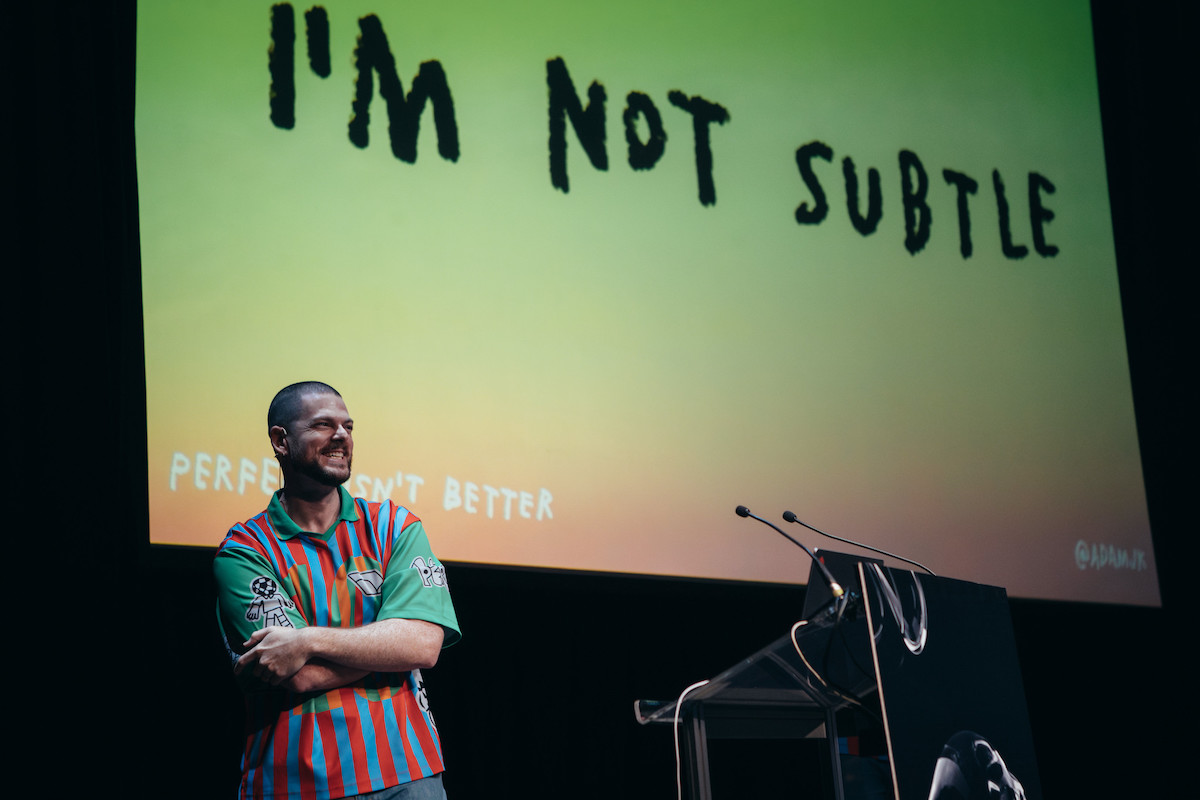
Adam J. Kurtz, best-selling author & artis
All of my hobbies are tied up in art or capitalism in some way. I was a designer in-house, and my hobby was side projects, and then the side projects became the job, and now it’s been 11 years… do I even have a hobby? I guess the practices are just the things that bring joy: rest, food, music, sex, travel. God this is so boring and normal, I love it.
Andrea Rodriguez RGD, creative designer & mural artist
I make it a point to get outside and travel whenever I can. I love visiting botanical gardens and exploring new places, both close to home and around the world. I also enjoy sketching plants and observing wildlife, especially tropical species that reconnect me with my Colombian roots. Exercise is another important reset for me. Whether it’s an F45 class or simply going for a walk, stepping away from my desk helps me return with a clearer mind and fresh perspective. Outside of work, I also love painting on canvas, sewing, and spending time with my cocker spaniel, Paco.
Alex Lampe, co-founder of Wiedemann Lampe
I have a five-year-old daughter who continually challenges the way I think and see the world. The woods become a fortress, the climbing frame becomes a rocket ship, a fallen branch becomes a magic wand. She reminds me that creativity starts by imagining what could be, not accepting what already is.
Beyond that, I’m an observational street photographer, always looking for stories hidden in everyday moments. It sharpens my visual wit and trains me to notice things people would normally walk past.
Benji Wiedemann, co-founder of Wiedemann Lampe
I have two very lively boys, aged eight and ten. Anyone who’s been there understands exactly what I mean. Children have an extraordinary ability to pull you into the present moment. They’re a brilliant reminder of what’s truly important when I find myself getting swept up in the work vortex.
And if you think client feedback is tough, spend an afternoon with my boys. You’ll leave with a whole new appreciation for your clients.
Diana Varma RGD, design educator & podcaster
I get out of office by moving as far away from my normal routine as possible. I find that being in new spaces—both physical and mental—helps a lot. Taking social media sabbaticals 2x/year for a month or two at a time and turning on my out of office notification to manage expectations (and then actually leaving the tech at home!) is a game changer for realigning with my priorities.
Guillermo Flores Pacheco, art director, illustrator & designer
In addition to designing, I’m also a musician, composer, singer, and multi-instrumentalist. It’s a great way of channeling my emotions and expressing what I can’t convey through design. I’m currently working on my new solo project. Exercise is part of my daily routine; it keeps me focused and is a good way to disconnect from work. I also really enjoy going out for a nice cup of coffee—it’s a kind of ritual where I can meditate and be with my thoughts.
Lauren McConnell, creative business & ADHD coach
If it’s summertime, you will find frolicking in the sunshine. It might be a patch of grass, a beach, a patio, or just walking & people watching, and accidentally spending too much money in cool indie shops.
I love meeting people IRL. I try to put myself in situations where I can meet new people at least once a week by attending cool community focused events, or having coffee with someone I’ve only just met. Meeting other creative people is my biggest energy booster – I leave with a brain full of ideas… what creative do you know who doesn’t love that!?
I am also a rabbit hole nerd…I have several library books checked out at any given time, and there is some kind of elaborate serial-killer-mindmap connecting the dots between them all.
I’m also a reality dating show expert, and a wig enthusiast (neither of these things are related 😉).
Lee Eldridge, designer, educator, researcher & author
Usually by finding another place to make a mess. I like making, well, pretty much anything – photography, prints, fabrication… particularly working on projects that involve physical materials. Anything that requires tape, clamps, glue, paint, test prints, and an apology to whoever has to clean the table afterwards is usually a good start!
Teaching also helps to get me out of my own head: Most students haven’t been mentally ground-down yet, and are very good at asking questions that expose rules we have all been following for years (without really remembering why). And sometimes some of those rules turn out to be kind of dumb when you re-examine them…
As much as I would like to be: I am not especially good at sitting quietly in nature and waiting for inspiration. But give me a rotary tool, some offcuts pulled out of a recycle bin, and a mission to make something and I’ll be centered in no time!
Maggie Chen, principal product manager at Ada
Getting away from screens and doing physical things that nourish my mind and body. My favorite ones: aerial silks and cooking. Silks grounds me in my body, and sometimes my best ideas arrive when I’m hanging upside down. Cooking activates all five of my senses, and I’m able to articulate my ideas much more clearly after a good meal.
Marjorie Malpass, founder & CEO of Nerve Strategic
The number 1 thing that gets me out of the office is travel. I do an annual week-long writing retreat to a different Canadian city, this year it’s Montreal.
To be in a city that is both familiar and unknown, to be alone while surrounded by a creative ambience, I reenergize my love for the meaningful work I do for my business.
For me, giving myself this time is a gift, and while I do write for a few hours everyday, I also walk, bike, visit friends and have great meals.
Martina Flor, lettering designer & author
I can’t help but see the world through the lens of letterforms. One of my favorite practices is simply walking through a city with a camera. I photograph street signs, storefronts, handwritten notes, menus, painted walls, and all kinds of lettering that most people walk past without noticing.
Getting out of the office also means spending time with my two children. They remind me to switch lenses and see the world through theirs. Suddenly, I notice things I would have overlooked as an adult.
Rachael Seatvet RGD, graphic designer, art director, illustrator & maker
If the activity I am doing can technically be done outdoors, you’ll find me outdoors doing it.
Robert Smith RGD, branding expert, author & speaker
For me walks, film, music and country drives keep me inspired and grounded. They inspire me, and open my eyes to new and different experiences.
Valentina D’Efilippo, information designer
For me there are really two ways of getting out of the office.
The first is not about physically leaving at all. It is about stepping outside the demands of commercial work and making space for a different kind of creative practice: drawing, painting, visualizing a new set of data because I am interested in telling those stories, or experimenting with sound and other senses. Much of my self-initiated work has happened outside paid working hours—still at my desk, but with a completely different aim. The driver is pure curiosity. There is no client brief, no approval process, and no immediate commercial outcome. It is simply time to experiment, play, take risks, and follow my curiosity.
The second approach, which is equally—if not more—important, is to genuinely leave work behind: email, Figma, Slack, LinkedIn, Instagram. Everything. I used to think that mastering my craft meant devoting more and more time to it. Now I understand that it also means protecting the time when I am not working or creating.
You can also find these, along with more information, in your comprehensive information email sent the week of October 12. Search “important event information” in your inbox to find it.
Access the attendee portal: Check the tickets you’re registered for, including workshops and roundtables. You can also sign up for roundtables and workshops here.
Access the app: Download the Pheedloop Go! app in your mobile app store to view the schedule, the tickets you’ve signed up for and register for additional tickets.
Important: The email you enter needs to match the email you’re registered with. Reset your password if needed for access.
If you have trouble logging on, please email Zaria at [email protected].
Common FAQs
Will I be able to watch recordings of the presentations? Yes, all presentations are recorded, and all tickets receive access to the recordings for three months after the event. These are posted to the streaming platform. Become an RGD member to receive indefinite access to the recordings and our extensive video library.
I’ve registered. When will I receive information about attending the conference? Registrants will receive a detailed email about attending DesignThinkers approximately one week before the event (week of October 12). The email includes how to log in to the event platform, how to view the session recordings and what to expect when you arrive at the venue if you are attending in-person. Please check your spam and junk folders to make sure you aren’t missing any important information from us. The email address is no-reply [at] pheedloop.com; mark it as a safe sender if needed.
How do I view the optional programming I signed up for? Log in to the attendee portal, or the Pheedloop Go! app, to view your optional programming passes. Find them under “Tickets.”
Paul Jen Communications is a Toronto practice focused on one problem: what to do when a strong company’s brand starts to feel dated.
They help established organizations update their brand and identity to reflect how far the business has come, without losing the trust and recognition they’ve built.
We asked managing partner and DesignThinkers speaker Paul Jen a few questions about what makes PJC different, their recent work and why they find value in attending DesignThinkers.
What makes your agency different from other design firms?
We focus on a problem many studios avoid: how to modernize a trusted brand without losing what makes it trusted. It’s more about restraint than reinvention. Before we change anything, we work out what shouldn’t change, then design from there. It’s careful, deliberate work, and it’s what we do best.
Tell us about a recent project you’re really proud of.
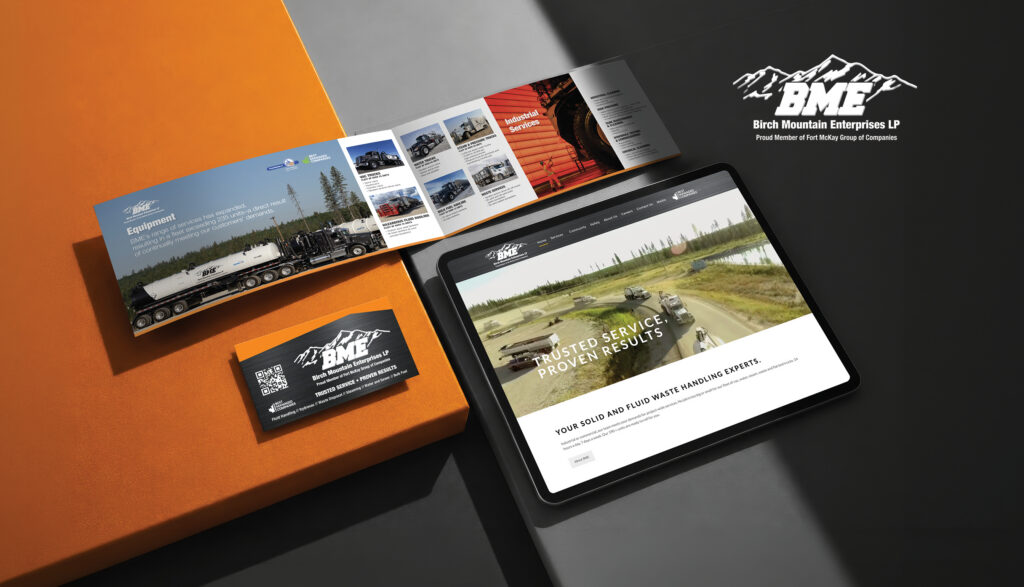
We’re proud of our work with Birch Mountain Enterprises, an Indigenous-owned company whose brand had fallen behind the business. The challenge was a common one: how to make a legacy brand feel current and credible without losing its character. We treated it as an evolution, not a rebuild, updating how the company presents itself while protecting what already worked. The company went on to earn Gold Standard in Canada’s Best Managed Companies. What we value most is simpler: helping a good, community-rooted business be seen for how good it is.
What are you and your team most looking forward to at this year’s DesignThinkers conference?
Being in a room full of people who care about the craft. DesignThinkers brings designers and studios together from across the country and beyond, and it’s a great place to be challenged and come back sharper. We’re looking forward to the talks, the roundtables, and the conversations in between. It’s also a chance for our team to step away from daily work, learn together, and reconnect with the wider design community.
Why is it important to your agency to send your team to DesignThinkers?
Because our work stays strong only when we stay close to the craft and the people driving it. DesignThinkers is the largest gathering of designers in the country, and taking part is how we support a community we belong to. For our team, it’s a chance to learn from people we admire, hear new ideas, and grow together. Supporting the conference is our way of giving back to a profession we care about.
These grants recognize outstanding emerging designers and provide an opportunity to gain exposure, connect with peers and industry leaders and participate in the DesignThinkers conference.
Up to seven recipients (possibility for an applicant to receive up to 2 grants) will receive:
$750 in cash to help offset travel, accommodation and related expenses (recipients of the grant supported by Pound & Grain receives $500)
Having your work featured is an additional benefit of the grant, but it’s not mandatory—the submitted work of some of the recipients will also be showcased on the main stage screens during conference breaks.
Eligibility criteria
To apply, you must be an Associate RGD Member in good standing at the time of the application deadline. Associate RGD Members have 8 or fewer years of professional experience and graduation from a recognized post-secondary program (scan of transcript or diploma required). Review all of the benefits of RGD Membership here.
**If you received a 2026 DesignThinkers Vancouver Development Grant, you are not eligible to enter for Toronto.
How to apply
To be considered, submit:
One design project from your portfolio (can be personal, school or professional work)*
A rationale for the project describing the context, process and solution*
Responses to the following questions:
Why do you wish to attend DesignThinkers?
What do you hope to gain from the experience?
If the project submitted is professional work, the information provided will be emailed to you and can be used for one of three case studies in an RGD Certification application. Find out about Certification.
Selection criteria
Applicants will be evaluated on the quality of the work and the thoughtfulness of their responses.
Each recipient receives registration to DesignThinkers Vancouver 2026 and $500 to help offset travel and accommodation costs. They will also be highlighed on the main stage screens during conference breaks.
This year’s grants were awarded with the support of sponsoring studios, whose selections reflect a shared commitment to nurturing emerging design talent across Canada. Thank you to this year’s Grant Sponsors: 123w, Becoming Design Office, OK DAVE, Pendo, Pound & Grain, PS&Co., Will and Rethink.
Below, we share the submitted work of our recipients:
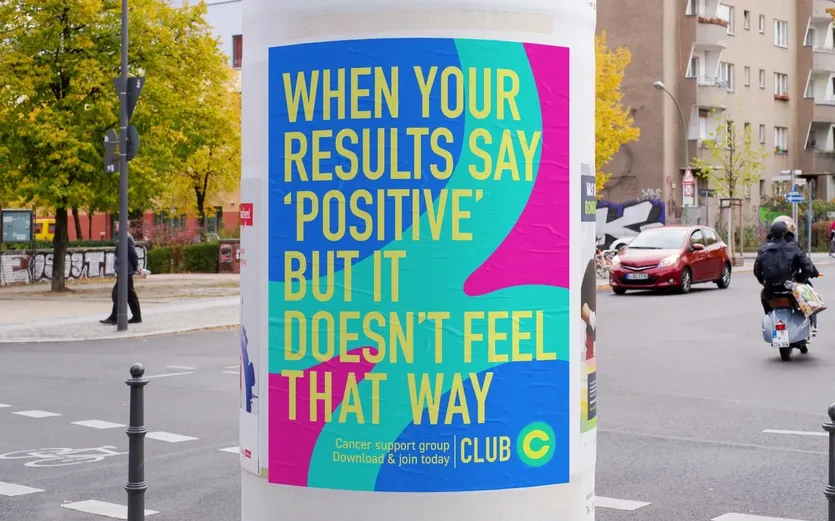
Club C is a conceptual support platform designed for adolescents and young adults diagnosed with cancer—a group whose needs are often underserved by resources built for an older audience. Rather than relying on clinical language or subdued visual systems, the platform embraces vibrant colour, humour and relatable language to create a sense of belonging for younger patients. The animated logo, inspired by cell division, functions as both a scientific metaphor and a flexible graphic element, while a saturated colour palette reclaims the muted tones of medical environments and transforms them into something more alive and empowering. Club C received an Honourable Mention in Advertising as part the 2025 RGD Student Awards.
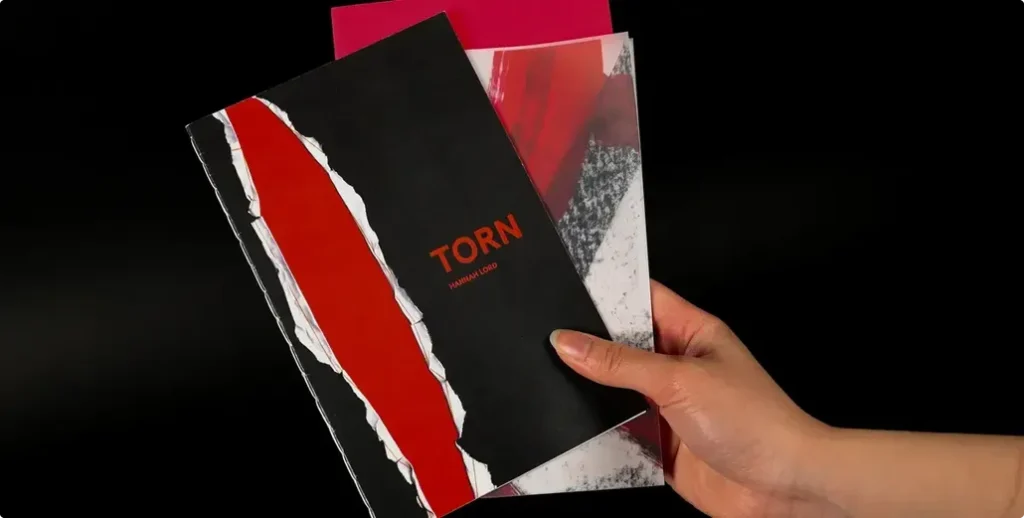
Torn is a three-part editorial series using discursive design to explore Maasai culture, history and the social challenges affecting women and girls. The series grew from a six-week design internship in Kenya, where Hannah worked with non-profit organizations and visited Maasai women’s villages, later developing the project through interviews, independent research and community participation. Each book takes a distinct visual approach, with the binding becoming progressively looser to mirror a child’s progression through harmful practices—and the second volume incorporates community-contributed drawings printed on vellum to create a translucent, haunting effect. Hand-drawn typography paired with infographics adds a sense of humanity to difficult data while supporting awareness, education and community-led change.
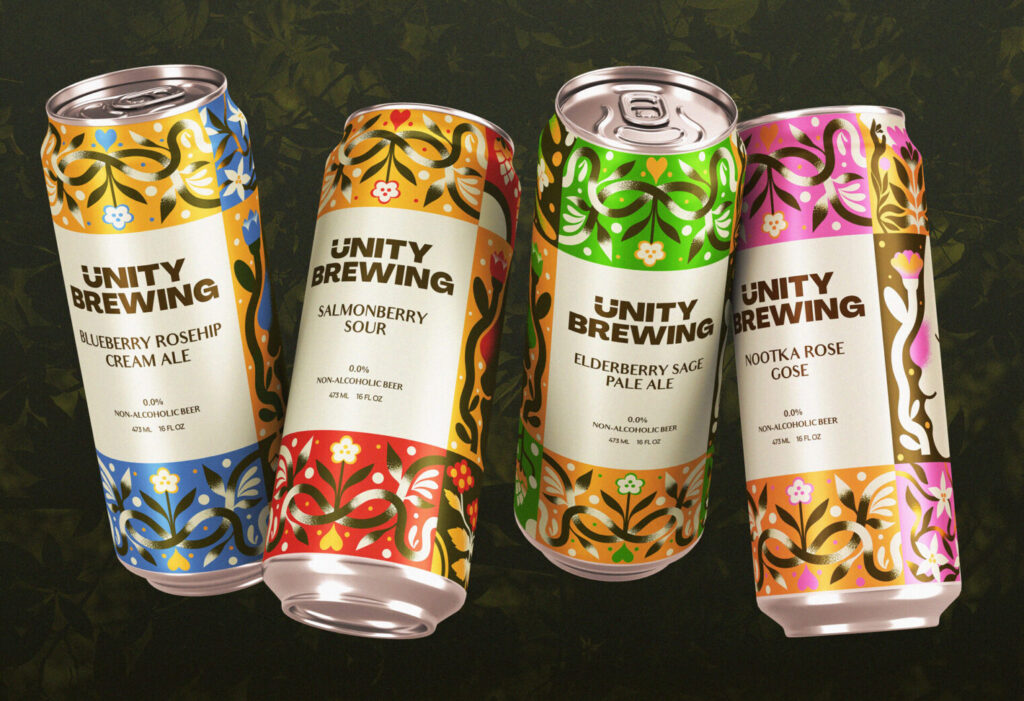
Unity Brewing is a conceptual brand identity and packaging system that repositions non-alcoholic beer as expressive, intentional and rooted in community. Research revealed that the majority of widely available non-alcoholic options in Canada are owned by the same multinational conglomerate, with packaging that largely mirrors alcoholic counterparts and offers little cultural differentiation—leaving a significant gap for a brand built on environmental responsibility and regional specificity. Illustration was chosen as the central medium to communicate warmth and social connectivity, with botanicals native to BC woven into scenes of everyday human connection. The final system spans four illustrated can designs, mixer packaging, merchandise and a beer festival truck, demonstrating how the identity scales across multiple touchpoints.
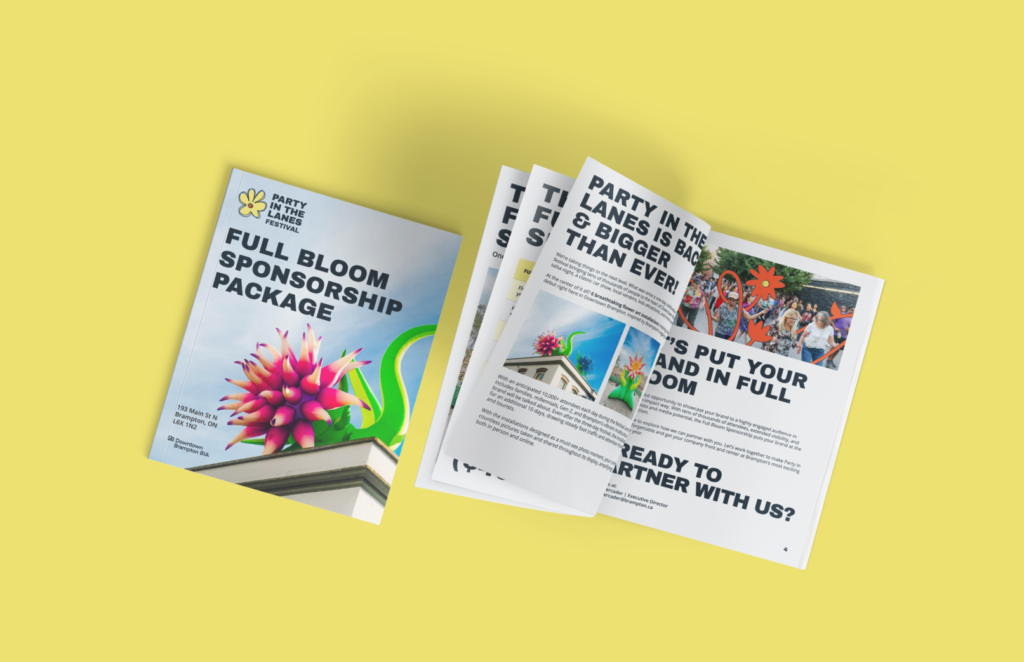
Party in the Lanes is a festival brand identity for the Downtown Brampton Business Improvement Area’s signature summer event, which features North America’s first inflatable flower art installation alongside live music, street performances and community activations. Centred on Brampton’s identity as Flower City, the identity uses hand-drawn linework and loosely sketched flower illustrations to capture a sense of vibrant, community-driven liveliness. A warm palette of yellows, reds and softer tones balances energy with approachability, while bold, playful typography reinforces the festival’s casual yet distinctive character. The campaign helped generate over 500,000 social media impressions and an estimated attendance of over 10,000 people across the three-day event.
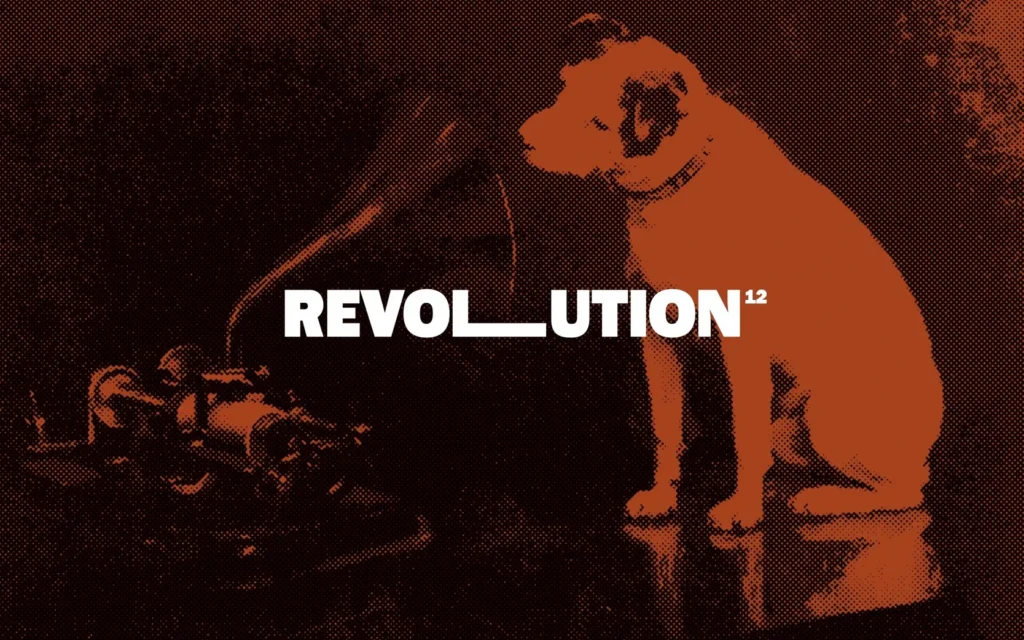
Revolution 12 is a thesis project from George Brown College proposing a subscription service that delivers one record, one book and one film each month, limited by design to encourage slower, more intentional engagement with physical media. The subscription box is structured to pace discovery, with each item concealed in its own sleeve to deepen the connection with each piece. A newspaper-style secondary deliverable, The Monthly Rev-iew, extends the experience with cultural commentary, reflection prompts and interactive elements that link all three items to a monthly theme. A 121-page process book documents the full project from research and strategy through to prototyping and branding.
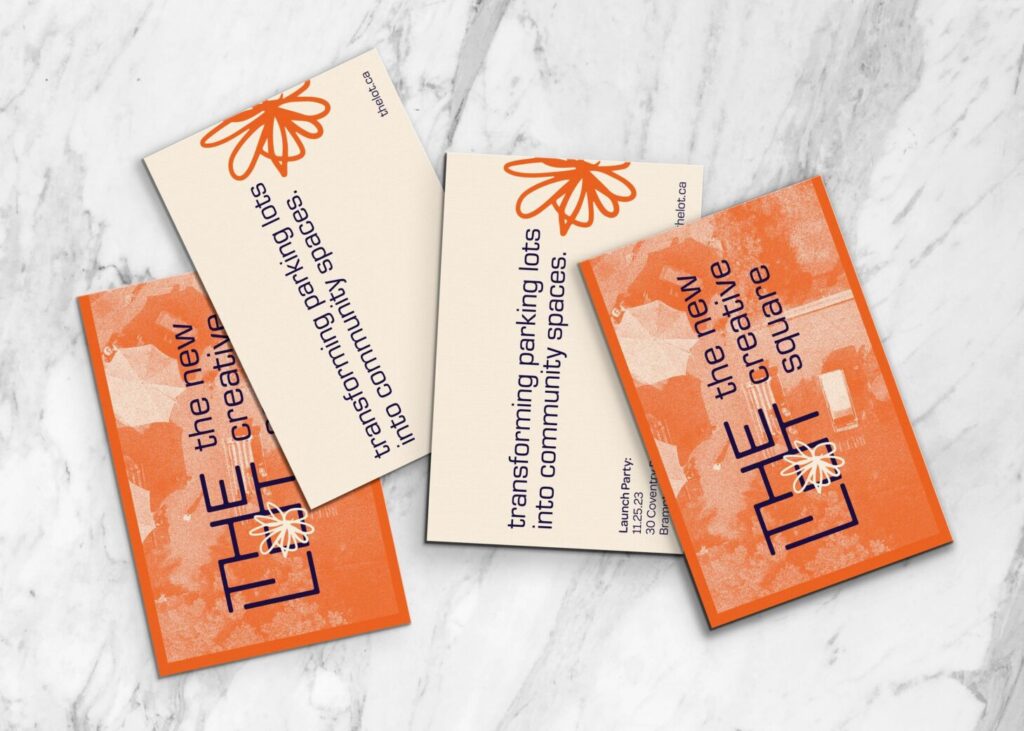
The Lot is a conceptual brand identity for a community-centred organization with a mission to transform underused urban parking lots into vibrant, inclusive gathering spaces. The visual system includes a primary brand identity alongside three sub-identities for music, marketplace and creative events, each maintaining cohesion while allowing for distinct expression across different programming. Deliverables include posters, transit advertising, wayfinding, merchandise and social media assets, demonstrating how the brand extends across physical and digital applications. The tagline “the new public square” positions the brand as a champion for reclaiming overlooked urban spaces for community connection.
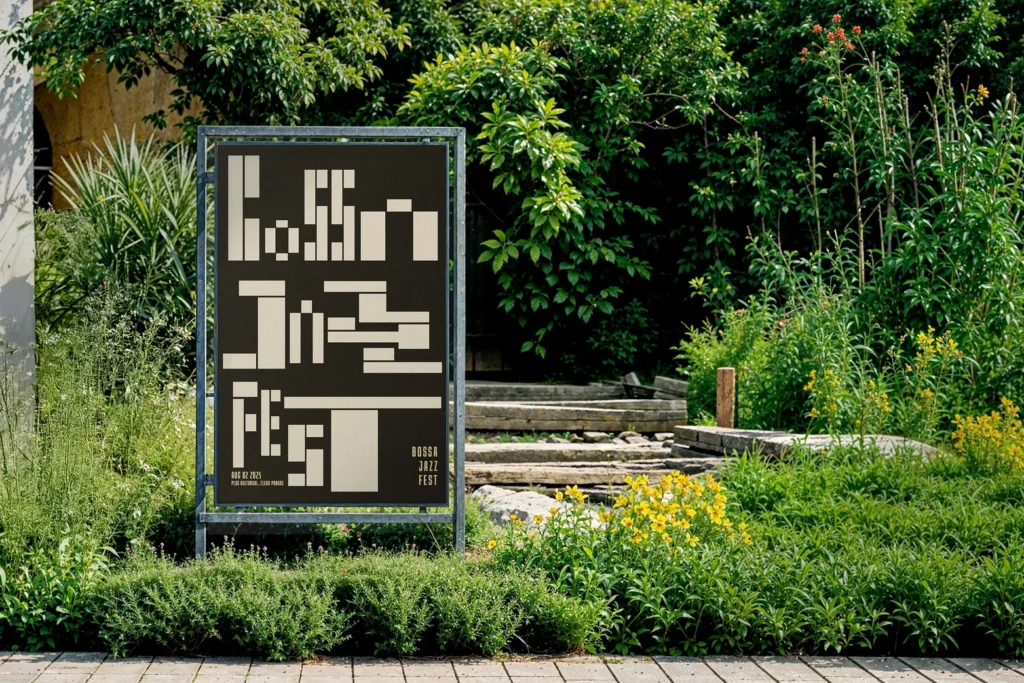
Bossa Jazz Fest is a brand identity for an annual music festival in Finland celebrating the intersection of bossa nova and jazz. The identity is built on a modular typographic system that translates three musical ideas—looped motif, syncopation and improvisation—into flexible visual structures. The festival name is broken into rectangular typographic blocks set on a strict grid, with repetition, off-beat shifts and subtle variation acting as visual analogues for musical ideas. The system adapts across tickets, social posts and merchandise at varying levels of abstraction, from clear informational applications to more expressive, pattern-driven compositions.
VORA is a personal portfolio project exploring the intersection of product design, branding and 3D visualization for a fictional performance footwear brand. The workflow combined Blender with graphic design software to develop a minimal, futuristic brand world, testing its visual language across a diverse range of outputs. Final deliverables include high-fidelity 3D product renders and shoe-box packaging, out-of-home advertising mockups and typographically driven web and mobile UI layouts, demonstrating how a cohesive brand identity scales across physical and digital touchpoints.
The applications for Development Grants for DesignThinkers 2026 in Toronto (Oct. 26–27) will open in July.
The 10 most popular DesignThinkers Podcast episodes
January 11, 2026
With 55 episodes released to date and over 40,000 downloads, the RGD podcast features thoughtful conversations with leading voices in design, creativity and leadership—all of whom have also took the stage at our DesignThinkers Conferences.
From reflections on career paths to practical insights into creative practice, these episodes continue to resonate with our community.
This list highlights the top five most downloaded episodes from Seasons 2 and 3 which features speakers from our 2025 DesignThinkers Conferences in Vancouver and Toronto along with our five most-listened to episodes from Season 1, spanning our 25 year history.
Adam JK
Embracing imperfection (Season 2)
Adam JK, a Toronto-born, Honolulu-based artist is known for his honest, humorous and emotionally-resonant work. In this conversation, Adam reflects on creative burnout, major life transitions and the challenge of finding purpose in an increasingly noisy world. He shares thoughtful insights on how making, doing and learning along the way can help creatives regain momentum and meaning.
Pali Palavathanan
Design as activism (Season 3)
In this episode, Pali Palavathanan explores design as a force for activism and change. Through his studio, Templo, Pali has collaborated with organizations such as the UN, Amnesty International and grassroots groups working toward social justice.
Drawing from his lived experience as a refugee, Pali discusses how values shape his studio’s approach, how to navigate projects with high ethical stakes and how to balance purpose-driven work with commercial realities. This episode offers a compelling perspective on responsibility, instinct and the real-world impact of design.
Members will be able to watch Pali’s DesignThinkers 2026 presentations in the new year. (All attendees have access until then through Pheedloop.)
Meg Lewis
Leveraging your quirks (Season 2)
Artist, performer and educator Meg Lewis brings joy, colour and energy to this conversation on embracing individuality. Known for her bold, playful work with brands such as Dropbox, Meta and Pinterest, Meg blends design with performance, improv and storytelling.
This episode feels like a creative pep talk, exploring how leaning into your quirks can help attract the right clients, build sustainable careers and show up more authentically. It’s a reminder that joy and play can be powerful strategic tools.
Members can watch DesignThinkers presentations by Meg Lewis:
Eva Cremers, a 3D artist and animation director based in the Netherlands, shares her unconventional path into motion and CGI. Blending a graphic design sensibility with vibrant, playful 3D worlds, Eva has worked with global brands including Apple, Amazon Music, Meta and Samsung.
The conversation explores how constraints helped shape her signature style, the excitement of creative discovery and her experimentation with generative AI—including training a model on her own work. Honest, curious and refreshingly candid, this episode dives into the heart of creative exploration.
Members can watch Eva’s presentation from DesignThinkers 2025 in Vancouver:
Independent creative executive Rachel Gogel discusses designing a career beyond traditional full-time roles. After leading multidisciplinary teams at organizations such as GQ, The New York Times, Meta and Godfrey Dadich, Rachel launched her own consultancy, working with both major tech companies and purpose-driven ventures.
This episode explores fractional leadership, negotiating value, leading without hierarchy and creating space for queer and marginalized voices. Rachel’s perspective offers clarity and encouragement for designers rethinking success, sustainability and leadership on their own terms.
Members will be able to watch Rachel’s DesignThinkers 2026 presentations in the new year. (All attendees have access until then through Pheedloop.)
Another presentation by Rachel for the RGD, from our Creative Directions Conference in 2021 is available:
Whether you’re revisiting a favourite episode or discovering these conversations for the first time, these podcasts offer timeless insight and inspiration for designers at every stage of their careers.
“We hope that 2026 DesignThinkers attendees feel permission to play and are inspired to close their laptop, pick up a pen, go for a walk or tear something up and start again. “Out of Office” is about the joy of process, rediscovering creativity in its raw, physical form and reconnecting with the community that fuels it. It is a reminder that inspiration often lives just outside your inbox.” — Holly Gallacher RGD
Daughter Creative joins the notable group of firms that have taken on the conference branding over its 26-year history.
Canada’s largest conference for the communication design industry, DesignThinkers gathers visionaries from a variety of disciplines to explore creativity, the design process and the future of design thinking.
DesignThinkers 2026 will be held at the Vancouver Playhouse on May 26-27 and Toronto tentatively scheduled for Oct 20-21, both with options for live-streaming.
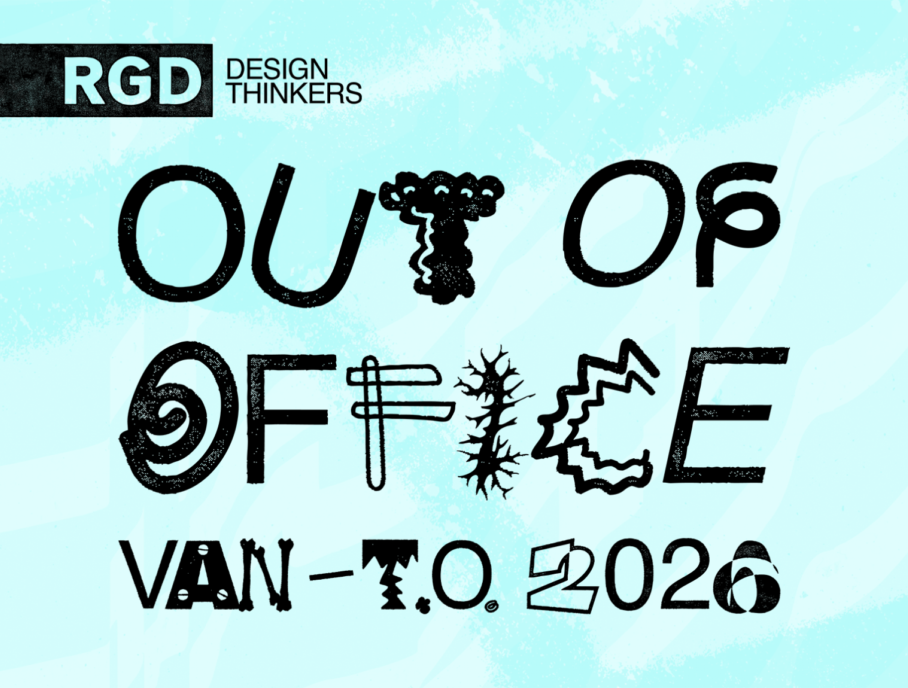
The 2026 DesignThinkers identity is built around “Out of Office.” The design reflects a kind of making that is driven by curiosity, observation and the physical act of creating, not limited by software or digital tools.
Built from found materials, textures and type fragments, the system feels imperfect, analog and intentionally human. It reminds us that design is not just what we make, but how we see.
The conference itself is about connection—leaving behind screens and schedules to gather with people who see the world through the same creative lens. “Out of Office” celebrates the spark that happens when you step away from your desk and back into conversation.
The team at Daughter shared their excitement in seeing the idea come alive as speakers, attendees and partners interpret and extend it. “Out of Office” was never meant to be a closed system—it is a creative invitation.
When asked about unexpected outcomes in the development of the identity, the team reflected on the value of getting hands-on again.
“We were reminded how energizing it is to get messy again. In a digital-first world, returning to tactile making, scanning, tearing, photographing and printing rekindled the curiosity that got us into design in the first place. The process itself became the proof of the idea: new energy appears when you step away from routine tools and rediscover the joy of making.”Holly Gallacher RGD
The team also highlighted their love for how the textures carry the story. Many assets were built from materials gathered on real walks — torn posters, scribbled notes and bits of print ephemera. When scanned, layered and recomposed, they form a visual language that feels both spontaneous and intentional.
It serves as a reminder that inspiration is everywhere: in the grit of the city, the paper under your hand or in the moment you finally step outside.
Holly Gallacher RGD, Daughter Creative
Holly is an award-winning designer with over a decade of experience transforming imaginative concepts into creative and unexpected outcomes. Now a Creative Director, and previously holding the role of Senior Designer at Nike. Specialising in Visual Identity, Apparel Graphics, Digital, Print and Packaging. Holly’s innovative work can be seen around the globe, and has been featured in British Vogue, Elle, Forbes, New York Times and GQ magazine.
Firm owners share why they invest in DesignThinkers for their team
August 27, 2025
“Even hearing the same talk, each member of the team takes away something different, and it’s really exciting to develop those different perspectives.” — Jennifer Taback RGD
Jennifer Taback RGD and Meggan Van Harten RGD, Co-Founders of Design de Plume Inc., have been attending DesignThinkers since they were students. Now running their own firm, they not only continue to attend the conference, but they also bring numerous members of their Sudbury-based team.
We spoke with Jenn (L) and Meggan (R) about why they prioritize attending DesignThinkers with their staff.
As a firm owner, why do you invest in this opportunity for your team?
Jenn: I’ve found so much value at the conference, all the way from being a student to a firm owner. I want my team to experience the same information, excitement and inspiration I have on their own creative journeys. There is nowhere else I can find such broadly informative sessions for all levels of my staff.
What is the make-up of your team that attends?
Jenn: It varies by year. We encourage staff to attend in person when they can, but having a virtual conference option allows more of our staff to participate. Especially our remote staff who live in their home communities.
Meggan: We’ve offered the conference to not only design staff, but also project managers and developers. Team empathy is very important for laying down trust and if everyone is exposed to new ideas and ways of thinking, it can only further team trust.
How has it been valuable for your team to attend as a group?
Jenn: Having a shared experience where we can cover different ground and come together to chat about how those ideas might impact our own work is so valuable to us. Even hearing the same talk, each member of the team takes away something different, and it’s really exciting to develop those different perspectives.
What keeps you coming back year after year?
Jenn: The variety of speakers, the great topics, and the amazing amount of energy that’s contained for a brief moment during the conference. It is one of my favourite times of the year!
Meggan: Being able to connect with the design community at large and seeing the growth of the industry on a large scale.
What would you say to a firm owner who might be interested in bringing their team?
Jenn: Make it a fun team trip, spend the day learning and soaking in ideas and have a great dinner to chat about where everyone’s thoughts are at afterwards!
If you could sum up the experience of attending DesignThinkers with your team in one word, what would it be?
Step into the world of type design with Eleni Beveratou
August 25, 2025
“We don’t limit ourselves to just ten colours or images across all our projects, so why restrict our typographic choices?” — Eleni Beveratou
Eleni Beveratou is a type designer and Creative Director at Dalton Maag. Ahead of her typography workshops this year, we asked her a few questions about how she got into type design, what attendees can expect to learn during her sessions and what she’s most excited about in the world of typography at the moment.
We’re so excited to be hosting your typography workshops again this year! Can you tell us a bit about yourself, and your teaching style?
My name isEleni Beveratou, and I’m a Creative Director at Dalton Maag, a London-based typeface design studio. I’m originally from Greece, where I studied and later worked at a branding agency. Early in my career, I realized that understanding type was crucial to becoming a better graphic designer. I joined the Master’s programme at the University of Reading, expecting to spend just one year studying type before returning to graphic design. Instead, I fell in love with typography and have dedicated my career to it for the past fifteen years.
When I first started working with type, I found the terminology quite rigid and somewhat elitist. That experience has shaped my teaching approach: I prioritize approachability, focusing less on specialized vocabulary and more on practical insights, helping designers integrate type effectively into their everyday work.
You’re leading workshop days in Halifax, Montreal, Ottawa and Toronto. One workshop is focused on wordmarks, and the other on cultural nuances in typography. What made you choose to teach these topics?
I always try to choose workshop topics that participants can immediately apply to their projects. While it’s unrealistic to teach typeface design from scratch in three hours, we can explore practical techniques for using type effectively in graphic design.
I chose these two topics because I feel they’re especially relevant to the design community in Canada. Creating wordmarks is a fundamental part of brand identity that graphic designers will regularly encounter. So I believe it’s essential knowledge to have.
The second workshop on cultural nuances in typography feels particularly relevant to Canadian designers, who often work in at least two languages. From my past visits, I noticed that many studios undertake international projects involving diverse writing systems. Addressing these cultural considerations feels both timely and essential.
Is there anything you wish more design professionals understood about typeface design, or typeface selection?
I wish designers felt more confident using a broader range of typefaces. I often hear professionals say they stick to the same ten fonts, which always puzzles me. We don’t limit ourselves to just ten colours or images across all our projects, so why restrict our typographic choices? Often, this hesitation stems from licensing concerns, uncertainty about typographic hierarchy, or the complexity of evaluating new fonts. My goal is to help demystify these barriers through these workshops.
What are you most excited about in the world of type design right now?
I’m thrilled to see the growing adoption of Variable Font technology, which is expanding creative possibilities and significantly improving digital typography. For a long time, digital type was viewed as simply functional, limiting its potential.
Given my Greek heritage, I’m also particularly excited that these innovations are extending beyond the Latin writing system. It’s encouraging to see meaningful conversations and developments happening globally, finally addressing typographic diversity in a more inclusive way.
Why this Creative Strategy Lead loves attending DesignThinkers with her team
August 25, 2025
“If you’re a creative lead who is interested in bringing your team, definitely do it! It creates space for your team to learn, meet other design teams and provides exposure to current trends in the industry.” — Kathleen Scott RGD
First attending DesignThinkers in 2002 as a student, Kathleen Scott RGD, Creative Strategy Team Lead atBruce Power(L), now attends the conference alongside her team. We spoke with Kathleen about attending with her colleagues and why it’s a value experience for everyone.
What was the process like for getting approval for your team to go?
We’re fortunate that we work for a company that prioritizes continuous learning and professional development opportunities. Before our team registers, I have a conversation with our manager to confirm we are able to attend.
What is the make-up of your team that attends?
Six designers from our team attend.
How has it been valuable to attend as a group?
Nothing beats the shared experience of getting out of the office, watching inspiring design presentations and spending time in downtown Toronto together. Each designer on our team will have different takeaways and things they find worthwhile at the conference. It’s always interesting to hear each of their highlights. We return to work with new ideas and our creative batteries recharged.
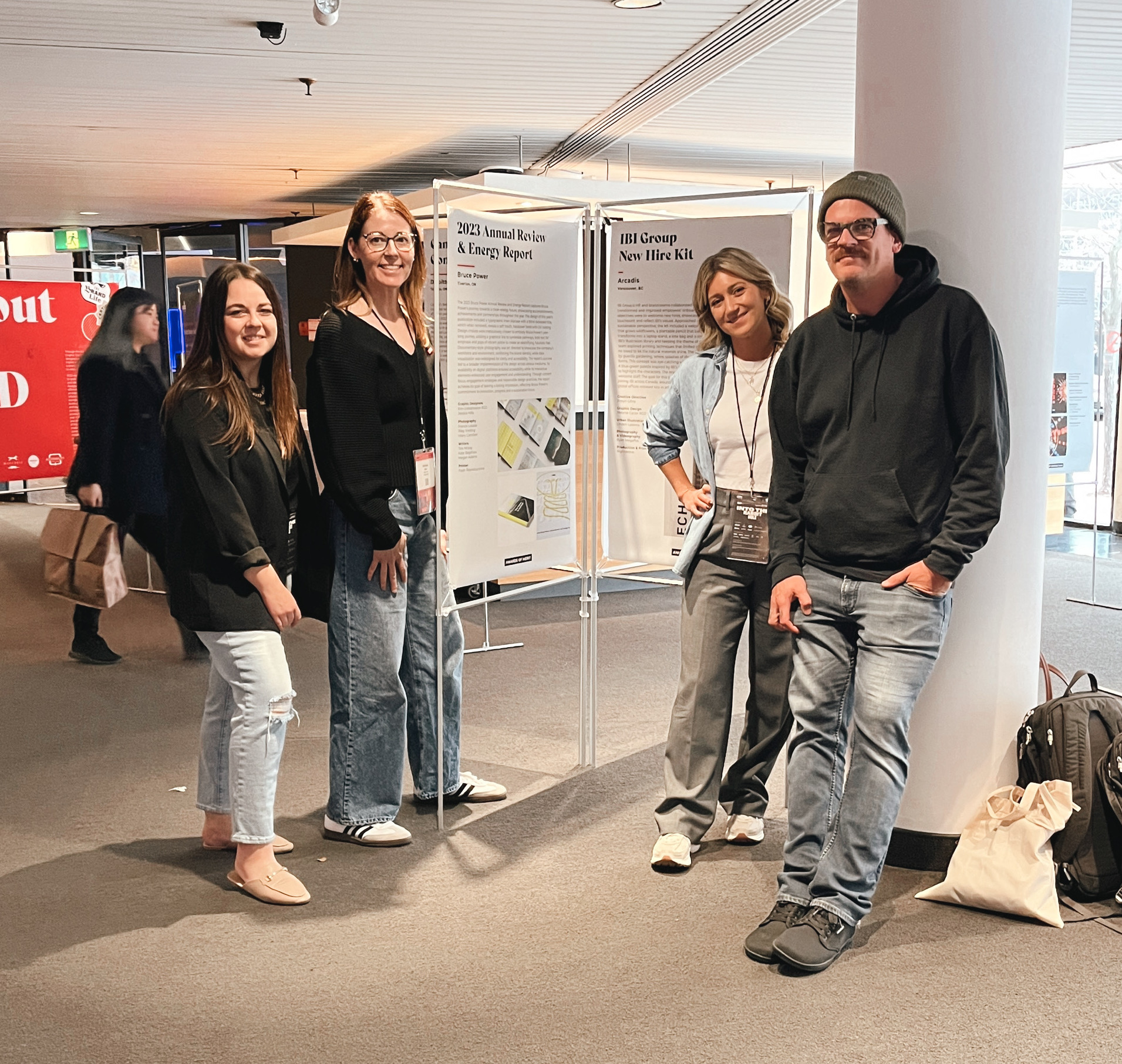
Kathleen and her colleagues at Bruce Power have been attending DesignThinkers as a team for years.
What keeps you coming back year after year?
The quality of speakers and their presentations keeps us coming back to DesignThinkers year after year. I often say how lucky we are to have this world-class design conference right here, in Canada. The conference also allows us to see old colleagues and classmates that we may have otherwise lost touch with. It’s a fun reunion and great networking opportunity each year.
What would you say to a creative lead who might be interested in bringing their team?
If you’re a creative lead who is interested in bringing your team, definitely do it! It creates space for your team to learn, meet other design teams and provides exposure to current trends in the industry. I would also recommend checking to see if your company or department has a portion of their budget set aside for professional development to use for the conference. If not, see if attending DT can be included in next year’s budget.
If you could sum up the experience of attending DesignThinkers with your team in one word, what would it be?