Now’s the time to ask your employer for the time off (and ticket) to attend DesignThinkers in Vancouver.
Make the process easier by using our request to attend letter templates.
Now’s the time to ask your employer for the time off (and ticket) to attend DesignThinkers in Vancouver.
Make the process easier by using our request to attend letter templates.
DesignThinkers is coming back to Vancouver on May 13 and 14, 2025. Join us for two days of presentations, workshops and networking opportunities. Register here.
Confirmed speakers include:
– Eva Cremers, Dutch 3D illustrator and animator
– Valentina D’Efilippo, information designer
– Carlos Segura, book/type designer
– Erin Sarofsky, film titles designer
– Matt Luckhurst, marketing designer
– Vincent Wanga, Executive Creative Consultant, Author of “The Art of Direction”
– Catalina Estrada, illustrator and pattern designer
Design is a force. One that shapes how we see the world. With every choice, we hold the power to break barriers, challenge convention and shift perspectives. But not if we don’t question our own.
We’re here to give the industry a perception interception. And unlock potential through perspective. Because if you’re stuck in the same ways of seeing — you might be missing out.
Through always moving, morphing, adapting and evolving, we’re not just embracing shift in our industry, we’re here to shape it. Welcome to DesignThinkers 2025. Shift is about to go down.
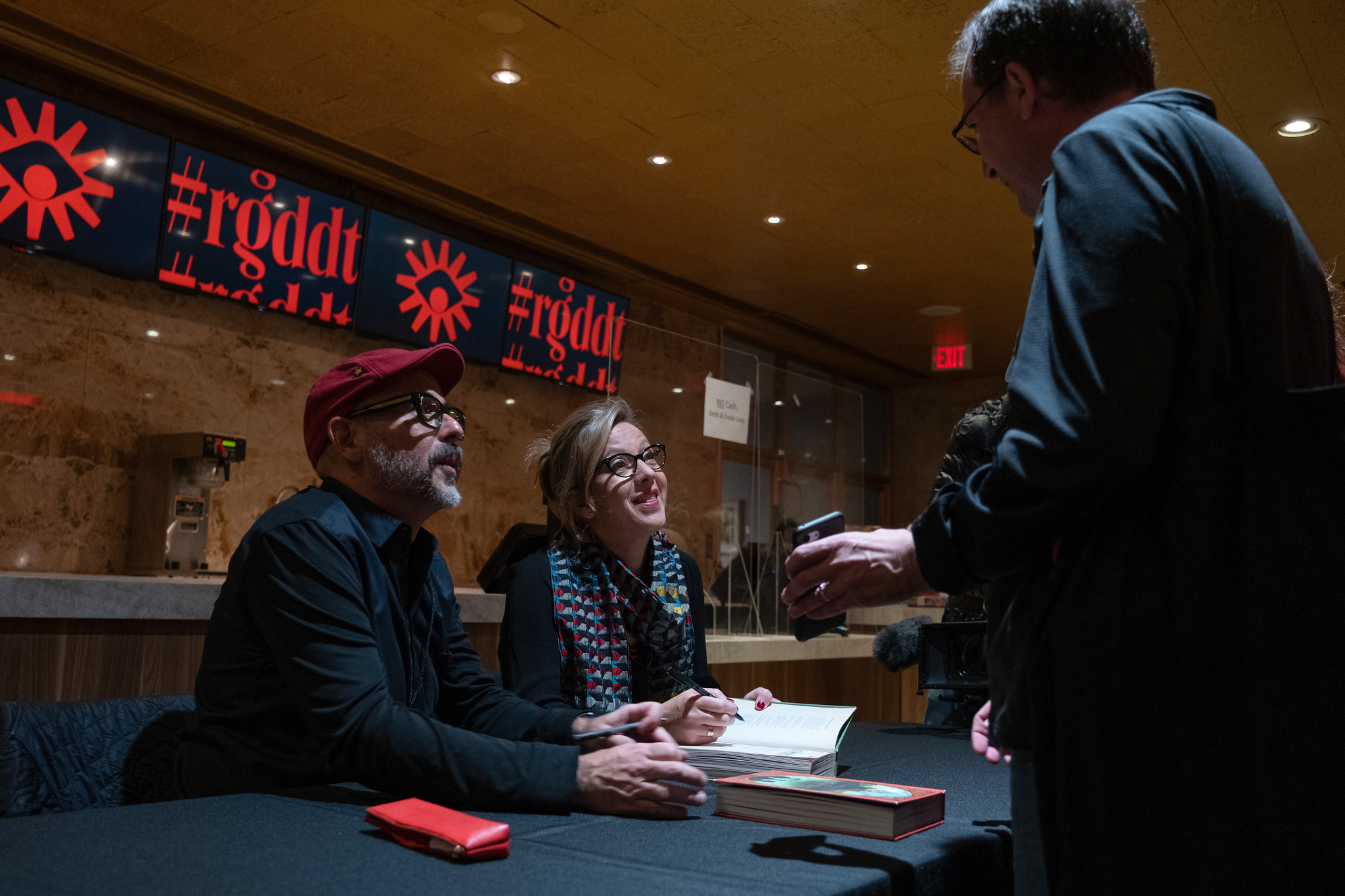
Book signings will take place in the Mezzanine both days of the conference. Bring your copies from home if you have them, or purchase a book at our on-site bookstore.
Annie Atkins and Radim Malinic
Nick Asbury and Julian Bleecker
Robin McLoughlin and Christopher Doyle
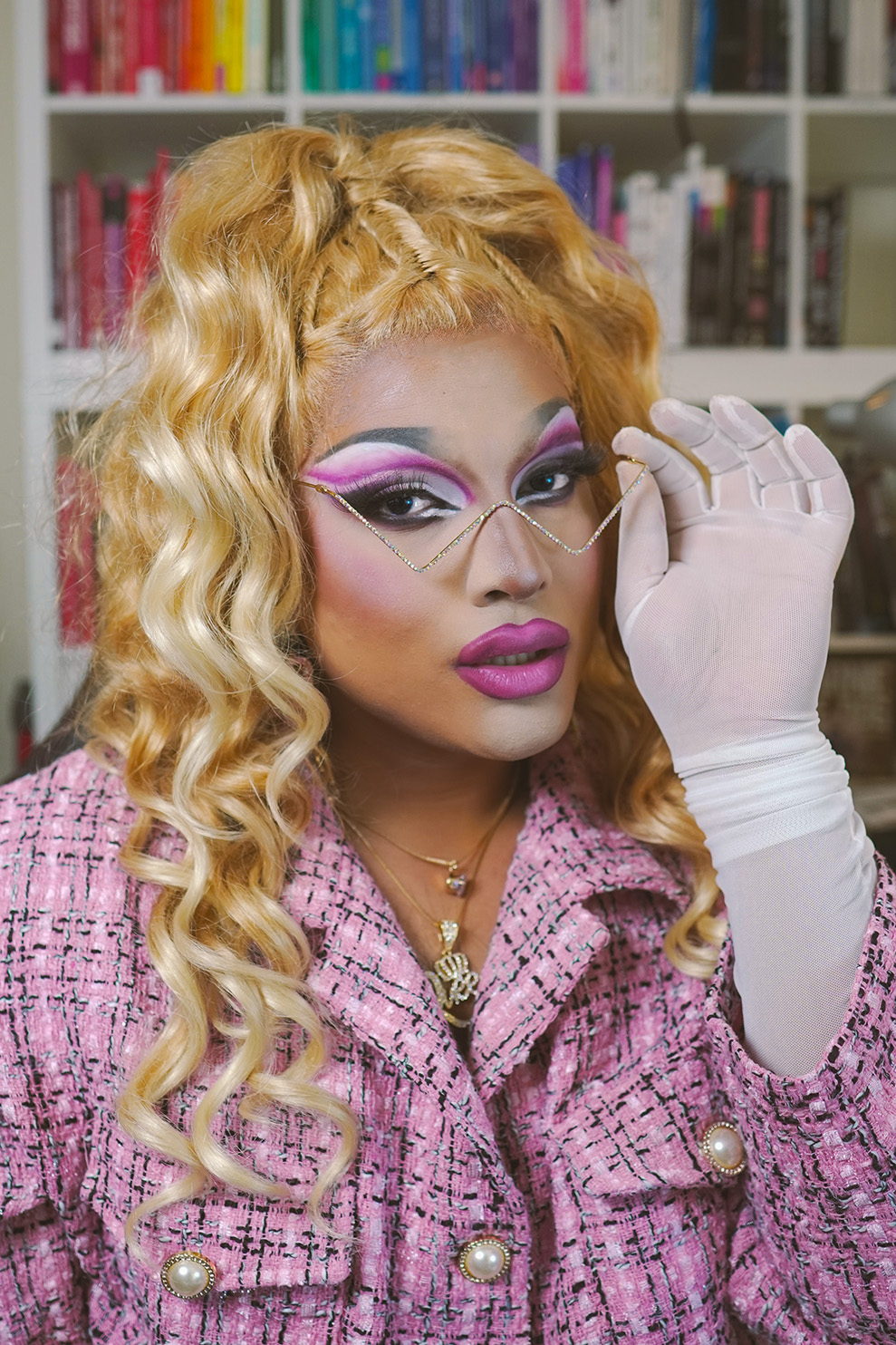
Guy Anabella is a fierce creativity professor and drag artist, drawing inspiration from her Guyanese heritage. Ahead of her workshop at DesignThinkers Toronto, we asked her a few questions about drag, its influence on her approach to teaching and what attendees can expect from the conference’s first-ever session hosted by a drag queen.
Can you tell us a bit about how you got into drag?
Ever since I was a kid, I’ve been drawn to powerful, feminine energy—Whitney, Mariah and especially the Spice Girls were my icons. But growing up, I was taught that boys weren’t ‘supposed’ to like those things, so I pushed that part of myself aside for years. As I became more comfortable with my identity, I realized that drag was an incredible way to reconnect with those influences and express both masculine and feminine parts of myself. What started as lip-syncing Britney in my room has now become a way to heal my inner child and embrace the full spectrum of who I am. And also be so incredibly creative!
You’re an award-winning creativity professor. How does your work as a professor influence your approach to drag, and vice versa?
At first, I didn’t think academia and drag could influence each other—after all, you don’t often see drag in a classroom setting. There’s also this level of professionalism that you feel like you have to maintain. But I quickly realized they absolutely do intersect. Drag is an incredibly creative art form, from makeup and costumes to performances. It’s about expressing yourself, often in ways that challenge societal norms, and that’s a valuable lesson in creativity and design. In the classroom, I’ve found that students appreciate this unique perspective because drag artists (kings and things included), in their own way, have been teaching society about inclusion and self-expression for decades.
Is there a lesson in creativity and self-expression that you’ve learned from your drag journey that you find yourself teaching your students?
One of the biggest lessons I’ve learned from drag is that true creativity comes from feeling psychologically safe. That’s why creating inclusive environments—whether in the classroom, the workplace or any creative space—is so important. When people feel accepted for who they are, they’re able to take risks, explore new ideas and ultimately be their most creative selves. For me, drag has reinforced that we need to build those spaces for everyone.
You’re leading a workshop at DesignThinkers where participants can design their own drag characters! Can you give a brief overview of what people can expect to do in the session?
Eeeee! What an honour! Shoutout to RGD for curating queer content! I’m really excited to lead this workshop at DesignThinkers. This is an opportunity for participants to explore their creativity through the lens of drag, no matter their gender or background. We’ll dive into the art of drag and use creativity exercises to help each person design a character that reflects their unique personality. This session is all about creative exploration and self-expression.
What do you hope participants take away from your workshop?
I hope participants walk away from this workshop with a deeper appreciation for drag as an art form and the creativity it embodies. Drag is about celebrating yourself, your gender expression and elevating all the positive things of who you are. It’s like stepping into a superhero version of yourself. I hope folks were able to see that they can access their drag persona at any time to embrace and amplify their unique strengths, creativity and confidence. I want them to feel inspired to apply these tools in other areas of their lives, whether that’s in design, problem-solving or self-expression. I also hope it sparks thoughts on how inclusivity can enhance their creative processes and overall work.
Secure your spot in Guy Anabella’s workshop, Design Your Own Drag Character! ($20), on November 8 at 11:30 a.m. Register when you purchase your conference ticket or according to the additional programming registration instructions in your pre-conference emails.
I do feel like a kid before Christmas as I wait for DesignThinkers. When I was growing up, one of the true joys was flipping through catalogue pages (I miss printed catalogues!) and looking through the toy section at the newest Lego or Action Force figures. I would read the beautifully crafted descriptions and dream that my aunt and uncle were secretly rolling in cash to be able to buy the whole section for my cousins and me.
Seeing the list of the DT speakers triggers the same endorphin rush as my past catalogue journeys. Over the course of 25 years, some of the biggest names in design and design culture have graced the stages in Vancouver and Toronto. The conference has shifted, as the industry has, from large portfolio presentations to talks rooted in important, current topics that are affecting us as designers, and also us as citizens.
Like with Christmas when I never got everything in the catalogue, I can’t see every speaker at DesignThinkers. Here, I have picked my favourite projects from the five speakers I am jumping around my room in anticipation of seeing in November.

I am a house music fan. I have been for a long time And, if you enjoy house music, you probably know the record label, Defected. I am also a Studio Moross fan. Aries Moross and their team were asked to create a series of bold typographic background videos for Defected’s live events. I love the fact that Studio Moross created a day-and-night version of the visual toolkit and took advantage of the sheer scale of the massive video canvases—pure bliss with sound and design.

Anyone who has come in contact with Shantell Martin and her work will have been inspired to draw. I was introduced to her beautiful line drawings when she collaborated with Kendrick Lamar in Miami, and I have followed her since. Though clean and simple on the surface, Shantell’s large installations often tackle broad issues. Here, I chose her mural from Buffalo, New York (2017) simply because I have seen it in real life, but her entire portfolio is inspiring. Look for the stitching collaboration with her grandmother, Dot Martin.

I first read Elizabeth Goodspeed’s byline as part of the team behind Eye on Design. EoD, published by the AIGA, still stands as one of the most important design platforms during its both print and digital run. I love that when I see Elizabeth’s work, I feel as though I am being allowed into a personal design celebration. Anyway is a magazine created for tweens and teens. Its articles treat kids with dignity and respect and cover topics that they confront the everyday, from family, friends, gender and identity. Elizabeth and the designers who assist here have designed a printed place of comfort and inclusion that happens to also be super bright and joyous with moments of whimsy. RUNNER UP: Also, check out Elizabeth’s involvement with Pentagram in the fictional Minx magazine created for the HBO Max/Starz series.

When you watch movies that use a lot of visual effects, you can tell the difference in quality. Designers can sometimes make technology stick out like a sore thumb, while other designers integrate it seamlessly. Talia Cotton certainly is the latter. In Talia’s practice, she uses technology like a paintbrush. The great thing about her projects is that, even though they are rooted in complex digital frameworks, they feel intuitive, vibrant and alive. I was particularly moved by her project, COUNTER-ARCHIVING THE AVANT-GARDE. This site challenges the idea of a static, closed archive, hence Counter-Archive, by encouraging written discourse to grow and thrive in the platform around the subject of the Global South’s influence on American avant-garde music.

Department of Letters is a Toronto-based type foundry that was launched this year by Carl Shura. All cards on the table: I am a faculty member with Carl at the School of Design at Toronto’s George Brown College. He is one of the nicest people you’ll meet. In 2022, Carl won a CA Award of Excellence for his typeface Circulation, and I was super-excited to see the launch of Mullion (Heavy), a chunky grotesque that has some fun eccentricities. Carl is hosting a Type Design Crash Course at DesignThinkers, which will be a lot of fun.
Presented by the Association of Registered Graphic Designers (RGD), the Toronto DesignThinkers conference is the largest annual event in Canada for graphic designers and related communications professionals. But the conference is just one of many initiatives organized by the RGD going on during the year.
The Affiliate RGD Membership/DesignThinkers Combo Ticket provides the discounted “Member” rate to DesignThinkers, as well as savings on Membership in the RGD, which provides access to a range of benefits over the next 12 months. Below are some highlights.
Video Library
A special feature of RGD Membership is access to an archive of over 750 videos. These include recordings of inspiring DesignThinkers presentations going all the way back to 2011. Some of the many illustrious speakers whose talks are available include Michael Bierut (2018) Irma Boom (2014), Aaron Draplin (2021, 2018 + 2014), Karin Fong (2019 + 2013), Jessica Hische (VAN 2024, 2018 + 2011), Debbie Millman (2023 + 2014), Eddie Opara (2016), Stefan Sagmeister (2023 + 2012), Paula Scher (2023 + 2014), Erik Spiekermann (2014) and Jessica Walsh (2014).
Ongoing professional development
In addition to DesignThinkers, the RGD hosts over 40 hour-long webinars a year featuring live speakers offering practical information on topics ranging from UX to accessibility to the challenges of working in-house. RGD Members access all these live sessions free, as well as receiving guest passes to share with colleagues and friends.
Community
RGD Members can network and make connections with other designers throughout the year. In our Slack Community, professional Members can ask questions, access information and share thoughts on the issues impacting our industry. Virtual Communities connect Members who are working in similar disciplines or with similar clients and/or with similar backgrounds. Members also receive discounts on a variety of in-person events that take place across Canada throughout the year.
Profile
The RGD website is a hub for the Canadian design industry and Members are encouraged to post information about themselves and their work to the online Directory as well as contribute articles and other resources that are shared through the RGD’s e-newsletter, with over 25K subscribers. Members also receive discounts to enter RGD competitions, including our 2025 Branding Awards, the winners of which will be featured at next year’s DesignThinkers Conference
Giving back
Not only does RGD Membership provide tangible benefits as outlined above, it also supports a range of valuable resources and initiatives that contribute to a stronger, more informed and more equitable design industry. As a non-profit organization, the RGD invests all of our revenue, including Member dues, into our programming, particularly free resources like the Creative Earners survey, Accessible Design Guidelines and programs for emerging designers such as our Student Awards, Trailblazer Awards and DesignThinkers scholarships. By becoming a Member, you’ll be supporting all of this work as well as receive opportunities to contribute your time and expertise with invitations to judge our annual Student Awards, review student portfolios and act as a Mentor.
Leland Maschmeyer is co-founder and CEO at COLLINS. Ahead of his talk at DesignThinkers in Toronto, we asked him a few questions about his time at Chobani, what trend he thinks will impact the design industry and more.
Under your leadership, the two companies you’ve worked with have received numerous accolades for pushing boundaries and setting the bar for outstanding work. What is your leadership style like? How do you inspire your teams towards greatness?
There are many styles of leadership. I have come to know that my dominant style is known as “transformational” leadership. You can read online about the basics of it, so I’ll focus on my personal tenant: empower small teams with significant responsibility, shared context, decision rights and clear success criteria will always make dreams come true.
You were responsible for Chobani’s much lauded brand and company growth, with it being recognized for its innovative approach to design, creativity and marketing. While you were there, the brand’s value expanded from $1B to $10B. What’s one of the biggest lessons you learned from your time at Chobani?
In the early 2010s, I had an itch I couldn’t scratch: I felt that brand systems were no longer fit for purpose. It’s not that a classic kit (logo, typeface, colours and secondary graphics) wasn’t useful. It’s that the many uses, value and approach to creating them has become completely misaligned with what contemporary brand building demands.
The 1980s gave birth to the brand identity system kit. But as the branding challenges of business changed so dramatically over the following 30 years, you would have imagined that the marketing and brand profession would have responded and evolved.
It did not. I mean, not at all. It was stuck, lost some back somewhere in 1983. I mean, it had not changed much since I was a toddler.
In 2016, I joined Chobani to test my thesis of what a real, next-generation brand solution could be. After our remarkable five-year run there, I left the company with, I think, my thesis proven. I believe the “brand world system” building is the next era. This is a culture-centric, community-conscious approach to designing a brand. It weaves together the diverse scope of expression with which contemporary brands struggle. It’s still a kit of workable assets and rules. But its starting point is different, it defines a much broader scope of brand activity, and the management of it – over time – is much different.
Since I returned to COLLINS, we’ve been building brand world systems with many of our clients, helping them enjoy the benefits of what we learned with Chobani.
We love to show our highlight reels in this industry, but we’ve all worked through disappointment and perceived failure—we lose a pitch, a campaign doesn’t land how we’d hoped. How do you manage through these dips?
While failures leave bruises, I never let them define me. I always try to build with or from them. My advice, find one good lesson in a failure and it will not be a failure. The failure is to brood and beat yourself up. Learn and move. Failures are the bricks building the cathedral of success.
Besides AI, are there any emerging trends or technologies you foresee impacting the future of design?
Distributed/remote work will, over the long term, have a dampening effect on revenue for the vast majority of design firms. It will increase the pool of competition among design firms, drive down the fees that design firms can command, and will push revenue distribution towards a power law curve. (A what?)
This will force design firms to find ways to meaningfully differentiate their offering to command a desired – even necessary – price point. So, the way I see it, it will be difficult, but soon enough it will be better for our profession. It’ll bring focus.
This year’s conference theme is “Into the Rabbit Hole.” Is there any topic or idea that you’ve been diving into lately?
I have been diving deep into how professional sports teams build their draft-day strategies and how they evaluate the most extraordinary prospects. I am obsessed with finding great, talented people and building great, talented teams.
DesignThinkers is turning 25 this fall. To celebrate this milestone and say thank you for your support, we’re giving away 25 free tickets to past attendees.
To enter, share your favourite photo(s) from the conference on Instagram or LinkedIn. Whether it’s of a memorable talk, you with a speaker, a group photo with your friends or colleagues or something else entirely, we want to see it.
1. Make a post featuring a favourite photo (or photos) from the DesignThinkers conference
2. In the caption, give a bit of context and share why the moment matters to you
3. On Instagram*, tag @rgdcanada on the photo itself and use #rgdDT. On LinkedIn, tag the RGD’s page in the caption and use #rgdDT
*Ensure your Instagram profile is public. Instagram posts must be on the feed, not stories. Stories will not count towards the giveaway.
Photos can be your own or from the RGD’s Flickr albums. If using Flickr photos, please credit the photographer if they’re listed (at the top of the album when you are viewing it).
The contest is open until Friday, September 6. 25 winners will be selected at random, and then notified and announced by Tuesday, September 10. Only one post per entrant.
You’ve been in the design industry for over 20 years. What inspired your shift from client work towards focusing on educating and mentoring designers?
I am always eager to take on new challenges and believe my mission for the next 20 years is to infuse realism and honesty into design education. I grew up in a design environment that valued craft, patience and perseverance. However, social media has led a generation to believe that these qualities no longer matter. Many now focus on meaningless productivity rather than meaningful action. The proliferation of AI prompts, outdated college curriculums and productivity hacks from design influencers fail to prepare real designers for the real world. I believe that if I can help designers navigate the unpredictability of dealing with actual clients, the predictable aspects of design will become second nature.
Where does traditional design education fall short? How is your approach addressing these gaps?
Traditional design education often emphasizes theoretical knowledge over practical experience. While students may graduate with strong technical skills, they often struggle to apply these skills in real-world situations, particularly when dealing with clients and project constraints. The curriculum focuses heavily on essential elements such as typography, portfolio development and the history of design. Although this foundational knowledge is important, the curriculum insufficiently addresses communication, soft skills and the unpredictable traits that define a successful professional in the real-world design industry. Furthermore, there is limited emphasis on entrepreneurship, leaving graduates unprepared for the multifaceted roles they must assume to stand out in a competitive field.
Shifting to brand design, can you share a bit about a pitch that went really well? What was your biggest takeaway from it?
I have never pitched for work. To me, the idea of giving away a load of ideas for free, especially when competing against five others also working for free, has never made sense. There only ever seems to be one winner in these scenarios, and it’s rarely the design teams pitching. My biggest takeaway for anyone reading this is that you can build a successful and fulfilling design career without ever needing to pitch for work. Instead, I’ve always focused on becoming a niche. My strategy revolves around creating a pull towards my services, rather than pushing my services onto others. While pitching can be effective for some, it’s not a path I have personally aligned with.
You have over 750k followers on Instagram! Your community is engaged and you’re always sharing content that’s both entertaining and useful. In your experience, what makes a designer worth following? Do you have advice for designers who want to share more of themselves and their work online?
Firstly, remember that no one will remember you on your deathbed for having an Instagram following, so don’t measure your success by audience size. Many successful designers aren’t even present on social media. However, social media can be a great way to connect with others and establish yourself as a consistent contributor to the design community.
Always remember why you’re sharing your work. Is it to attract clients? To educate others? Knowing your purpose is crucial. Storytelling and offering value are effective ways to engage with your audience. Finally, keep in mind that no one cares as much as you do. Done is better than perfect, so just post your work and move on.
This year’s conference theme is “Into the Rabbit Hole.” Is there any topic or idea that you’ve been diving into lately?
Human behaviour is my constant obsession. Understanding the biology and reasoning behind our choices and actions absolutely fascinates me. One of the main reasons I want to dive deeper into the education space is because many people adopt a one-size-fits-all approach to pricing, selling, creativity, and business. They often believe their way is the only correct way.
By learning more, I’ve embraced a one-size-fits-one approach, which has profoundly benefited me as a designer, educator and human. Recognizing that everyone I meet is different makes the idea of treating them all the same feel ludicrous.
Dominic Prevost is an award-winning creative director and design educator. In advance of his workshop at DesignThinkers Vancouver, we spoke to him about Creative Archetypes, how he came up with the concept and why it’s so valuable for you to know yours in today’s ever-evolving design industry.
What’s a Creative Archetype?
With the democratization of our tools, the rise of AI and the fact that all the inspiration we’ll ever need is never more than a couple clicks away, I believe that the best way to level up our creativity is to look inward first. Creative Archetypes are my attempt to help define and organize the way in which all of us tap into our creativity.
The concept behind this workshop has been on my mind for years. Over the last six months, I created an entire methodology from scratch, beta tested it with colleagues, friends and students. I’m super excited to unveil it at DesignThinkers.
How many Creative Archetypes are there?
Sixteen actually! All of them are unique but—without revealing too much—I’ve split them into four categories that share distinct traits: The Navigators, The Dreamers, The Wildcards and The Wise. If you want to know more, you’ll have to attend the workshop. That’s all I’m willing to tell!
What’s with the illustrations?
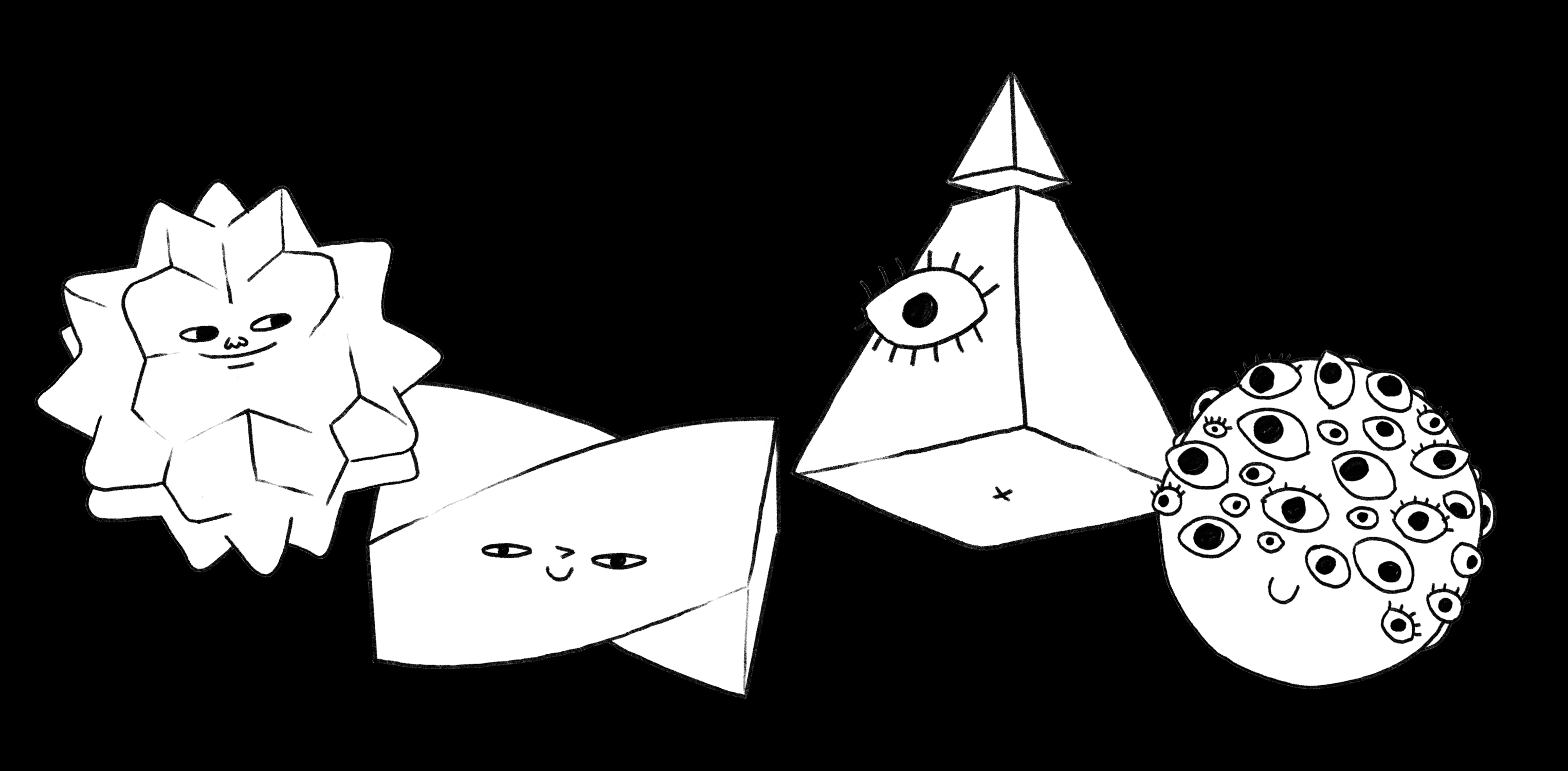
I’ve illustrated each Archetype based on their core traits. I won’t tell you their names, but some are round, others are boxy, spiky, layered, squishy… Whatever their shape, they’re all meant to illustrate the core principle behind each archetype. I had a lot of fun bringing them to life.
What can attendees expect during the workshop?
Growing up, I’d sneak into my older cousin’s bedrooms, past the scary Jim Morrison “Jesus pose” poster (you know the one) to steal their Filles D’Aujourd’hui magazines (think Quebec’s French version of Seventeen) to take the quizzes. Who wouldn’t want scientific, empirical, impartial answers to fundamental life altering questions like “Are you weirder than Avril Lavigne?” (Yes, I was scarier than Scary Spice), “What’s your dream date with Jonathan Taylor Thomas?” (Rollerblading), “Which Buffy character is your style icon?” (Spike, obviously). I want my workshop to capture that tingling feeling you get by filling up a quiz and comparing your result with your friends.
However, what I promise is actual value that each attendee will be able to apply. Because let’s face it, as trustworthy as Seventeen is, I’m not sure if I’ll ever get to have cheese fondue with Titanic-era Leonardo DiCaprio to see if we’re actually “a match made in heaven.”
By the end of the workshop, you’ll get a pretty interesting portrait of your creative personality, your strengths, areas of growth and your inspiration drivers to help you chart a part forward in your creative journey. I could go on forever, but to answer your question, the workshop will be one part personality test, and one part vision quest. If you’ve attended my previous talks or workshops, you know I’ll make every minute we have together count!
Why should we all know our Creative Archetype?
We so rarely take the time to think about how we think. The creative process is not one size fits all, and there are many different ways to harness our creativity. By unlocking your Creative Archetype, you’ll get to know yourself a bit better and (if my calculations are correct) gain a deeper understanding of what gets your creativity flowing.
Join Dominic’s workshop on finding your Creative Archetype on May 28 at 1:00 p.m. Spots are limited. Workshops are $20.