In the spirit of this year’s conference theme, we asked our speakers to share how they embrace their time when they aren’t working.
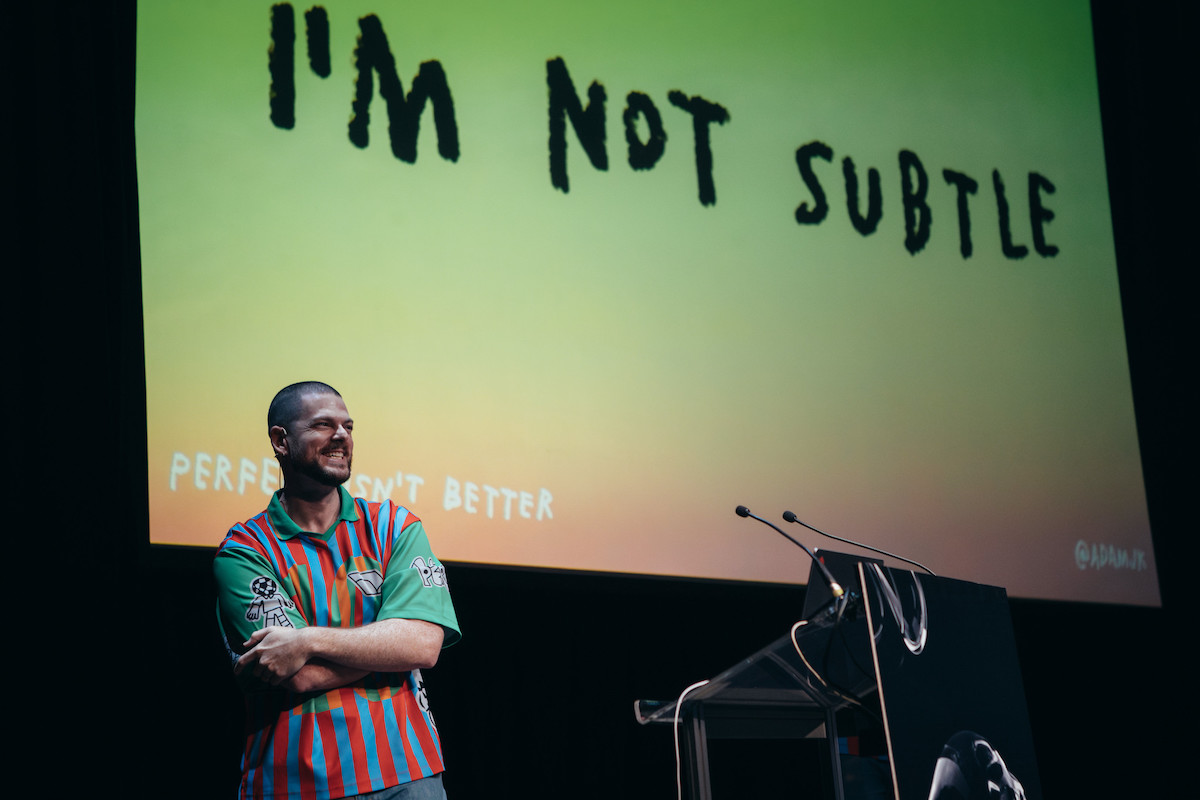
Adam J. Kurtz, best-selling author & artis
All of my hobbies are tied up in art or capitalism in some way. I was a designer in-house, and my hobby was side projects, and then the side projects became the job, and now it’s been 11 years… do I even have a hobby? I guess the practices are just the things that bring joy: rest, food, music, sex, travel. God this is so boring and normal, I love it.
Andrea Rodriguez RGD, creative designer & mural artist
I make it a point to get outside and travel whenever I can. I love visiting botanical gardens and exploring new places, both close to home and around the world. I also enjoy sketching plants and observing wildlife, especially tropical species that reconnect me with my Colombian roots. Exercise is another important reset for me. Whether it’s an F45 class or simply going for a walk, stepping away from my desk helps me return with a clearer mind and fresh perspective. Outside of work, I also love painting on canvas, sewing, and spending time with my cocker spaniel, Paco.
Alex Lampe, co-founder of Wiedemann Lampe
I have a five-year-old daughter who continually challenges the way I think and see the world. The woods become a fortress, the climbing frame becomes a rocket ship, a fallen branch becomes a magic wand. She reminds me that creativity starts by imagining what could be, not accepting what already is.
Beyond that, I’m an observational street photographer, always looking for stories hidden in everyday moments. It sharpens my visual wit and trains me to notice things people would normally walk past.
Benji Wiedemann, co-founder of Wiedemann Lampe
I have two very lively boys, aged eight and ten. Anyone who’s been there understands exactly what I mean. Children have an extraordinary ability to pull you into the present moment. They’re a brilliant reminder of what’s truly important when I find myself getting swept up in the work vortex.
And if you think client feedback is tough, spend an afternoon with my boys. You’ll leave with a whole new appreciation for your clients.
Diana Varma RGD, design educator & podcaster
I get out of office by moving as far away from my normal routine as possible. I find that being in new spaces—both physical and mental—helps a lot. Taking social media sabbaticals 2x/year for a month or two at a time and turning on my out of office notification to manage expectations (and then actually leaving the tech at home!) is a game changer for realigning with my priorities.
Guillermo Flores Pacheco, art director, illustrator & designer
In addition to designing, I’m also a musician, composer, singer, and multi-instrumentalist. It’s a great way of channeling my emotions and expressing what I can’t convey through design. I’m currently working on my new solo project. Exercise is part of my daily routine; it keeps me focused and is a good way to disconnect from work. I also really enjoy going out for a nice cup of coffee—it’s a kind of ritual where I can meditate and be with my thoughts.
Lauren McConnell, creative business & ADHD coach
If it’s summertime, you will find frolicking in the sunshine. It might be a patch of grass, a beach, a patio, or just walking & people watching, and accidentally spending too much money in cool indie shops.
I love meeting people IRL. I try to put myself in situations where I can meet new people at least once a week by attending cool community focused events, or having coffee with someone I’ve only just met. Meeting other creative people is my biggest energy booster – I leave with a brain full of ideas… what creative do you know who doesn’t love that!?
I am also a rabbit hole nerd…I have several library books checked out at any given time, and there is some kind of elaborate serial-killer-mindmap connecting the dots between them all.
I’m also a reality dating show expert, and a wig enthusiast (neither of these things are related 😉).
Lee Eldridge, designer, educator, researcher & author
Usually by finding another place to make a mess. I like making, well, pretty much anything – photography, prints, fabrication… particularly working on projects that involve physical materials. Anything that requires tape, clamps, glue, paint, test prints, and an apology to whoever has to clean the table afterwards is usually a good start!
Teaching also helps to get me out of my own head: Most students haven’t been mentally ground-down yet, and are very good at asking questions that expose rules we have all been following for years (without really remembering why). And sometimes some of those rules turn out to be kind of dumb when you re-examine them…
As much as I would like to be: I am not especially good at sitting quietly in nature and waiting for inspiration. But give me a rotary tool, some offcuts pulled out of a recycle bin, and a mission to make something and I’ll be centered in no time!
Maggie Chen, principal product manager at Ada
Getting away from screens and doing physical things that nourish my mind and body. My favorite ones: aerial silks and cooking. Silks grounds me in my body, and sometimes my best ideas arrive when I’m hanging upside down. Cooking activates all five of my senses, and I’m able to articulate my ideas much more clearly after a good meal.
Marjorie Malpass, founder & CEO of Nerve Strategic
The number 1 thing that gets me out of the office is travel. I do an annual week-long writing retreat to a different Canadian city, this year it’s Montreal.
To be in a city that is both familiar and unknown, to be alone while surrounded by a creative ambience, I reenergize my love for the meaningful work I do for my business.
For me, giving myself this time is a gift, and while I do write for a few hours everyday, I also walk, bike, visit friends and have great meals.
Martina Flor, lettering designer & author
I can’t help but see the world through the lens of letterforms. One of my favorite practices is simply walking through a city with a camera. I photograph street signs, storefronts, handwritten notes, menus, painted walls, and all kinds of lettering that most people walk past without noticing.
Getting out of the office also means spending time with my two children. They remind me to switch lenses and see the world through theirs. Suddenly, I notice things I would have overlooked as an adult.
Rachael Seatvet RGD, graphic designer, art director, illustrator & maker
If the activity I am doing can technically be done outdoors, you’ll find me outdoors doing it.
Robert Smith RGD, branding expert, author & speaker
For me walks, film, music and country drives keep me inspired and grounded. They inspire me, and open my eyes to new and different experiences.
Valentina D’Efilippo, information designer
For me there are really two ways of getting out of the office.
The first is not about physically leaving at all. It is about stepping outside the demands of commercial work and making space for a different kind of creative practice: drawing, painting, visualizing a new set of data because I am interested in telling those stories, or experimenting with sound and other senses. Much of my self-initiated work has happened outside paid working hours—still at my desk, but with a completely different aim. The driver is pure curiosity. There is no client brief, no approval process, and no immediate commercial outcome. It is simply time to experiment, play, take risks, and follow my curiosity.
The second approach, which is equally—if not more—important, is to genuinely leave work behind: email, Figma, Slack, LinkedIn, Instagram. Everything. I used to think that mastering my craft meant devoting more and more time to it. Now I understand that it also means protecting the time when I am not working or creating.
You can also find these, along with more information, in your comprehensive information email sent the week of October 12. Search “important event information” in your inbox to find it.
Access the attendee portal: Check the tickets you’re registered for, including workshops and roundtables. You can also sign up for roundtables and workshops here.
Access the app: Download the Pheedloop Go! app in your mobile app store to view the schedule, the tickets you’ve signed up for and register for additional tickets.
Important: The email you enter needs to match the email you’re registered with. Reset your password if needed for access.
If you have trouble logging on, please email Zaria at [email protected].
Common FAQs
Will I be able to watch recordings of the presentations? Yes, all presentations are recorded, and all tickets receive access to the recordings for three months after the event. These are posted to the streaming platform. Become an RGD member to receive indefinite access to the recordings and our extensive video library.
I’ve registered. When will I receive information about attending the conference? Registrants will receive a detailed email about attending DesignThinkers approximately one week before the event (week of October 12). The email includes how to log in to the event platform, how to view the session recordings and what to expect when you arrive at the venue if you are attending in-person. Please check your spam and junk folders to make sure you aren’t missing any important information from us. The email address is no-reply [at] pheedloop.com; mark it as a safe sender if needed.
How do I view the optional programming I signed up for? Log in to the attendee portal, or the Pheedloop Go! app, to view your optional programming passes. Find them under “Tickets.”
Paul Jen Communications is a Toronto practice focused on one problem: what to do when a strong company’s brand starts to feel dated.
They help established organizations update their brand and identity to reflect how far the business has come, without losing the trust and recognition they’ve built.
We asked managing partner and DesignThinkers speaker Paul Jen a few questions about what makes PJC different, their recent work and why they find value in attending DesignThinkers.
What makes your agency different from other design firms?
We focus on a problem many studios avoid: how to modernize a trusted brand without losing what makes it trusted. It’s more about restraint than reinvention. Before we change anything, we work out what shouldn’t change, then design from there. It’s careful, deliberate work, and it’s what we do best.
Tell us about a recent project you’re really proud of.
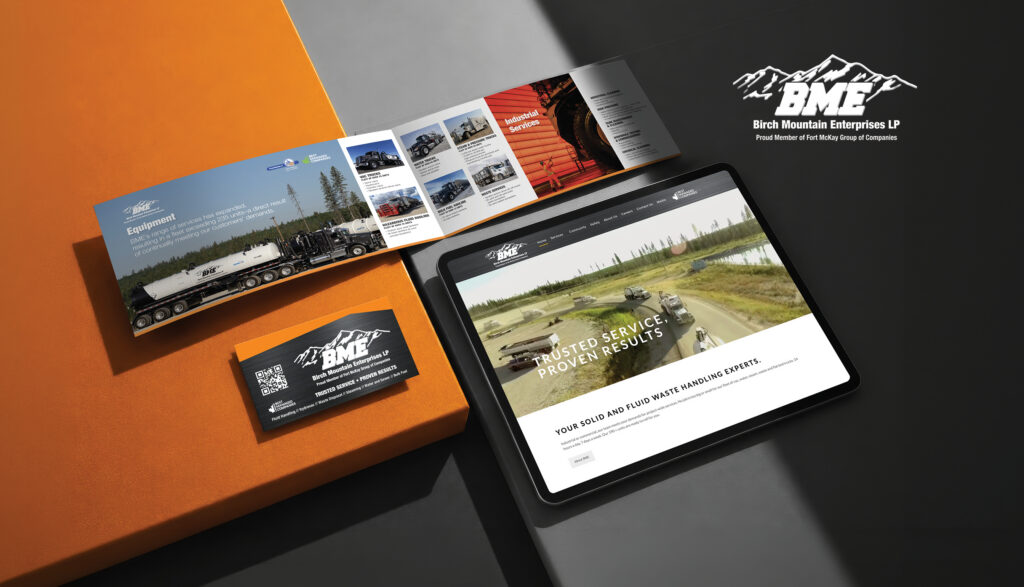
We’re proud of our work with Birch Mountain Enterprises, an Indigenous-owned company whose brand had fallen behind the business. The challenge was a common one: how to make a legacy brand feel current and credible without losing its character. We treated it as an evolution, not a rebuild, updating how the company presents itself while protecting what already worked. The company went on to earn Gold Standard in Canada’s Best Managed Companies. What we value most is simpler: helping a good, community-rooted business be seen for how good it is.
What are you and your team most looking forward to at this year’s DesignThinkers conference?
Being in a room full of people who care about the craft. DesignThinkers brings designers and studios together from across the country and beyond, and it’s a great place to be challenged and come back sharper. We’re looking forward to the talks, the roundtables, and the conversations in between. It’s also a chance for our team to step away from daily work, learn together, and reconnect with the wider design community.
Why is it important to your agency to send your team to DesignThinkers?
Because our work stays strong only when we stay close to the craft and the people driving it. DesignThinkers is the largest gathering of designers in the country, and taking part is how we support a community we belong to. For our team, it’s a chance to learn from people we admire, hear new ideas, and grow together. Supporting the conference is our way of giving back to a profession we care about.
Firm owners share why they invest in DesignThinkers for their team
August 27, 2025
“Even hearing the same talk, each member of the team takes away something different, and it’s really exciting to develop those different perspectives.” — Jennifer Taback RGD
Jennifer Taback RGD and Meggan Van Harten RGD, Co-Founders of Design de Plume Inc., have been attending DesignThinkers since they were students. Now running their own firm, they not only continue to attend the conference, but they also bring numerous members of their Sudbury-based team.
We spoke with Jenn (L) and Meggan (R) about why they prioritize attending DesignThinkers with their staff.
As a firm owner, why do you invest in this opportunity for your team?
Jenn: I’ve found so much value at the conference, all the way from being a student to a firm owner. I want my team to experience the same information, excitement and inspiration I have on their own creative journeys. There is nowhere else I can find such broadly informative sessions for all levels of my staff.
What is the make-up of your team that attends?
Jenn: It varies by year. We encourage staff to attend in person when they can, but having a virtual conference option allows more of our staff to participate. Especially our remote staff who live in their home communities.
Meggan: We’ve offered the conference to not only design staff, but also project managers and developers. Team empathy is very important for laying down trust and if everyone is exposed to new ideas and ways of thinking, it can only further team trust.
How has it been valuable for your team to attend as a group?
Jenn: Having a shared experience where we can cover different ground and come together to chat about how those ideas might impact our own work is so valuable to us. Even hearing the same talk, each member of the team takes away something different, and it’s really exciting to develop those different perspectives.
What keeps you coming back year after year?
Jenn: The variety of speakers, the great topics, and the amazing amount of energy that’s contained for a brief moment during the conference. It is one of my favourite times of the year!
Meggan: Being able to connect with the design community at large and seeing the growth of the industry on a large scale.
What would you say to a firm owner who might be interested in bringing their team?
Jenn: Make it a fun team trip, spend the day learning and soaking in ideas and have a great dinner to chat about where everyone’s thoughts are at afterwards!
If you could sum up the experience of attending DesignThinkers with your team in one word, what would it be?
Step into the world of type design with Eleni Beveratou
August 25, 2025
“We don’t limit ourselves to just ten colours or images across all our projects, so why restrict our typographic choices?” — Eleni Beveratou
Eleni Beveratou is a type designer and Creative Director at Dalton Maag. Ahead of her typography workshops this year, we asked her a few questions about how she got into type design, what attendees can expect to learn during her sessions and what she’s most excited about in the world of typography at the moment.
We’re so excited to be hosting your typography workshops again this year! Can you tell us a bit about yourself, and your teaching style?
My name isEleni Beveratou, and I’m a Creative Director at Dalton Maag, a London-based typeface design studio. I’m originally from Greece, where I studied and later worked at a branding agency. Early in my career, I realized that understanding type was crucial to becoming a better graphic designer. I joined the Master’s programme at the University of Reading, expecting to spend just one year studying type before returning to graphic design. Instead, I fell in love with typography and have dedicated my career to it for the past fifteen years.
When I first started working with type, I found the terminology quite rigid and somewhat elitist. That experience has shaped my teaching approach: I prioritize approachability, focusing less on specialized vocabulary and more on practical insights, helping designers integrate type effectively into their everyday work.
You’re leading workshop days in Halifax, Montreal, Ottawa and Toronto. One workshop is focused on wordmarks, and the other on cultural nuances in typography. What made you choose to teach these topics?
I always try to choose workshop topics that participants can immediately apply to their projects. While it’s unrealistic to teach typeface design from scratch in three hours, we can explore practical techniques for using type effectively in graphic design.
I chose these two topics because I feel they’re especially relevant to the design community in Canada. Creating wordmarks is a fundamental part of brand identity that graphic designers will regularly encounter. So I believe it’s essential knowledge to have.
The second workshop on cultural nuances in typography feels particularly relevant to Canadian designers, who often work in at least two languages. From my past visits, I noticed that many studios undertake international projects involving diverse writing systems. Addressing these cultural considerations feels both timely and essential.
Is there anything you wish more design professionals understood about typeface design, or typeface selection?
I wish designers felt more confident using a broader range of typefaces. I often hear professionals say they stick to the same ten fonts, which always puzzles me. We don’t limit ourselves to just ten colours or images across all our projects, so why restrict our typographic choices? Often, this hesitation stems from licensing concerns, uncertainty about typographic hierarchy, or the complexity of evaluating new fonts. My goal is to help demystify these barriers through these workshops.
What are you most excited about in the world of type design right now?
I’m thrilled to see the growing adoption of Variable Font technology, which is expanding creative possibilities and significantly improving digital typography. For a long time, digital type was viewed as simply functional, limiting its potential.
Given my Greek heritage, I’m also particularly excited that these innovations are extending beyond the Latin writing system. It’s encouraging to see meaningful conversations and developments happening globally, finally addressing typographic diversity in a more inclusive way.
Why this Creative Strategy Lead loves attending DesignThinkers with her team
August 25, 2025
“If you’re a creative lead who is interested in bringing your team, definitely do it! It creates space for your team to learn, meet other design teams and provides exposure to current trends in the industry.” — Kathleen Scott RGD
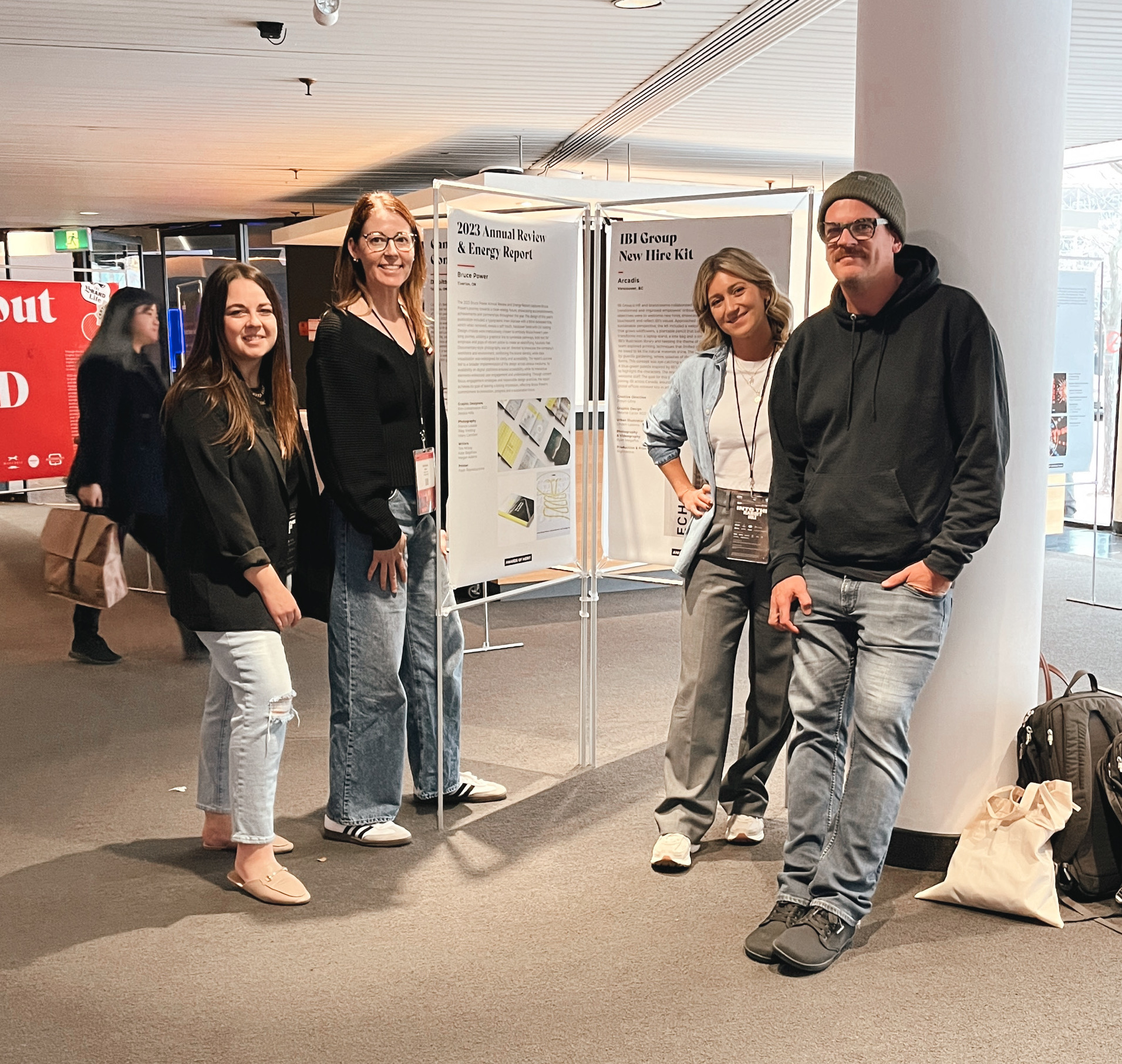
First attending DesignThinkers in 2002 as a student, Kathleen Scott RGD, Creative Strategy Team Lead atBruce Power(L), now attends the conference alongside her team. We spoke with Kathleen about attending with her colleagues and why it’s a value experience for everyone.
What was the process like for getting approval for your team to go?
We’re fortunate that we work for a company that prioritizes continuous learning and professional development opportunities. Before our team registers, I have a conversation with our manager to confirm we are able to attend.
What is the make-up of your team that attends?
Six designers from our team attend.
How has it been valuable to attend as a group?
Nothing beats the shared experience of getting out of the office, watching inspiring design presentations and spending time in downtown Toronto together. Each designer on our team will have different takeaways and things they find worthwhile at the conference. It’s always interesting to hear each of their highlights. We return to work with new ideas and our creative batteries recharged.
Kathleen and her colleagues at Bruce Power have been attending DesignThinkers as a team for years.
What keeps you coming back year after year?
The quality of speakers and their presentations keeps us coming back to DesignThinkers year after year. I often say how lucky we are to have this world-class design conference right here, in Canada. The conference also allows us to see old colleagues and classmates that we may have otherwise lost touch with. It’s a fun reunion and great networking opportunity each year.
What would you say to a creative lead who might be interested in bringing their team?
If you’re a creative lead who is interested in bringing your team, definitely do it! It creates space for your team to learn, meet other design teams and provides exposure to current trends in the industry. I would also recommend checking to see if your company or department has a portion of their budget set aside for professional development to use for the conference. If not, see if attending DT can be included in next year’s budget.
If you could sum up the experience of attending DesignThinkers with your team in one word, what would it be?
Roundtables are your chance to connect with other creatives in a small group setting. Led by senior design professionals, roundtables are hosted on both conferences days from 8:15 a.m. to 9:15 a.m. and 12:45 p.m. to 1:45 p.m.
We also have Group Mentoring Sessions for Students and Associate RGD Members to discuss career-related topics.
Bring your questions, offer advice and participate in conversations that will leave you feeling engaged and energized.
Sign up for roundtables and group mentoring sessions when you register for the conference. Roundtables are $10 each unless otherwise noted as free. Group Mentoring Sessions are $5 each.
October 1
8:15 a.m. – 9:15 a.m.
Ageism: Challenging assumptions
Brand identity beyond the logo
Cultural appropriation vs. appreciation: How can brands navigate cultural sensitivity and avoid missteps while celebrating diversity?
Designing your career path: Navigating growth in an in-house environment
Overcoming creative block
Setting boundaries and managing scope: Ensuring healthy working relationships and project success
Free software tools you’ve never heard of
Me, myself and I: Succeeding as a solo practitioner
Future-proofing your design career: Skills for the next decade
The value of research in branding
Group Mentoring (for Students & Associates) How to start freelancing
Group Mentoring (for Students & Associates) on Getting a job at an agency or design studio
12:45 p.m. – 1:45 p.m.
Internships: Are they all that?
How to grow as a designer when you’re a design team of one
The value of research in branding
Spaces & places: Designing for architecture, urban planning and placemaking
The art of the brief
Design leadership: How to foster trust, creativity and purpose
Mental health in design: Nurturing creativity and clarity of mind
Democratization of design: How to redefine your role when everyone’s a designer
Work smarter, not harder: Strategies for creating great work, efficiently
How to ask questions like a UX Researcher
What makes a strong RGD application? Demystifying the process of becoming an RGD (free)
Group Mentoring (for Students & Associates) on Getting a job at an in-house organization
Group Mentoring (for Students & Associates) on Generalist vs specialization, Pros and cons
October 2
8:15 a.m. – 9:15 a.m.
The gentle art of feedback: How to give it and get it
Designers as System Builders
Beyond numbers: Proving the value of design(ers)
The role of typography in branding: How font choices impact brand perception and readability
Rebranding in the modern era: Discussing the challenges and opportunities of rebranding in a dynamic market
Future-proofing your design career: Skills for the next decade
The Rise of the “Ugly”: Why ugly design Is winning in 2025
Why is the world losing colour?
AMA: Let’s talk RGD Certification (free)
Group Mentoring (for Students & Associates) on landing your first job (interviews skills/prep and portfolios tips)
Group Mentoring (for Students & Associates) on what design studios look for in a portfolio
12:45 p.m. – 1:45 p.m.
Pricing and contracts in branding: Establishing fair compensation and clear agreements
Me, myself and I: Succeeding as a solo practitioner
Imposter syndrome who? Gaining confidence in your skills and abilities
The evolution of a brand: How brands adapt and evolve over time while maintaining core values
How to ask questions like a UX Researcher
The role of intuition in design: Examining the balance between data-driven design and intuitive decision-making
Stand up and stand out: Gaining respect working in-house for government
Passion projects: Making work for fun, because it’s fun to do
Co-creating with machines: Which tools do you use
AMA: Let’s talk RGD Certification (free)
Designers as system builders
From freelance to founder: Business models for creative success
Group Mentoring (for Students & Associates) on leveraging networking to get a job
Apply to be a vendor in the DesignThinkers marketplace
July 16, 2025
Applications are open for small businesses selling Canadian-made, design-forward goods to be a part of the DesignThinkers marketplace at the conference in Toronto on October 1 and 2, 2025.
The marketplace is an opportunity to connect with 2,000 attendees and the RGD’s wider audience on social media and other digital channels.
Vendor spaces are 8-feet wide x 6-feet deep. All vendors receive a 6-foot table, chair, access to free Wi-Fi and one transferrable exhibitor badge.
Scholarships recognize outstanding emerging designers and offer a unique platform to showcase your creativity to the broader design community. This is your opportunity to gain exposure, connect with leading creatives and be part of the DesignThinkers conference.
Up to eight scholarship recipients will receive free registration to DesignThinkers Toronto 2025 and $500 in cash to help cover travel, accommodation and other expenses. This year, recipients and their work will also be showcased on the main stage screen during conference breaks. Entrants can win up to 2 cash prizes.
Eligibility criteria
To apply, you must be an Associate RGD Member in good standing at the time of the application deadline. Associate RGD Members have eight or fewer years of professional experience and graduation from a recognized post-secondary program (scan of transcript or diploma required). Review all the benefits of RGD Membership here.
If you received a DesignThinkers Vancouver 2025 scholarship, you are not eligible to enter for Toronto.
How to apply
To be considered, submit:
One design project from your portfolio (can be personal, school or professional work)*
A rationale for the project describing the context, process and solution*
Responses to the following questions:
Why do you wish to attend DesignThinkers?
What do you hope to gain from the experience?
* If the project submitted is professional work, the information provided will be emailed to you and can be used for one of three case studies in an RGD Certification application. Find out about Certification.
Selection criteria
Applicants will be evaluated on the quality of the work and thoughtfulness of their responses.
We’re going to Creative Director boot camp with Dominic Prevost
April 30, 2025
A good CD is able to riff on a given idea and help make it better–whether it’s by asking really pointed questions, building up on the idea, shifting the focus, ensuring the needs of the brief are met, etc.
We’re excited to have you back at DesignThinkers in Vancouver to lead another workshop! This year’s is all about acquiring the skills needed to become a creative director. What made you want to do a deep dive on this topic?
True story: I spent the bulk of the DesignThinkers Toronto delegate party interviewing attendees and asking them point-blank: “What kind of topic would you want covered?” From students to seniors, and even recruiters, one topic rose to the surface: how to prep creatives on what being a CD really is.
Why? In design & ad school, they’ll teach you to be a good creative, and you’ll polish those skills as you climb the ranks, until you become a CD and 80% of what you’ve learned doesn’t apply anymore. I can’t think of any other job that does that. The purpose of my workshop is to get aspiring CDs ready for the big transition – even if it comes years down the line–and get a taste of the realities of being a creative leader. Spoiler alert: it’s about so much more than making good creative work.
As a design educator yourself, what do you think is missing from current design and ad programs that would help designers make the eventual transition to more senior leadership roles?
I’d put even more emphasis on active listening, and critiquing/elevating the work of fellow students. A good CD is able to riff on a given idea and help make it better–whether it’s by asking really pointed questions, building up on the idea, shifting the focus, ensuring the needs of the brief are met, etc. A student who is able to listen, analyse then give feedback that adds value to any project in the classroom will get a huge advantage in the workplace. The same goes for receiving feedback too.
Can you share about an experience that shaped your understanding of what it means to be a great creative director? Whether it was when you were a junior staff, or now as a CD.
Being a CD is about more than managing the creative output of an organization. My big ‘ah-ha’ moment came when I realized I couldn’t turn to my leaders to deal with issues: it was up to me to lead the team towards change. It takes a strong vision, a lot of stamina and patience to stay the course and earn/maintain the team’s trust. I wear many hats as a CD, from janitor, to gatekeeper, to teacher, to therapist, to cheerleader–whatever my team needs me to be to thrive.
What is a skill that sets a good creative director apart from a great one?
To me, it’s an even split between stamina and curiosity. Stamina because meaningful change takes time, hiring the perfect team and unlocking their potential takes time, building a strong relationship with a client takes time, changing the culture of an organization takes time and–most importantly–finding your groove as a leader takes time. Curiosity because our industry is constantly changing, and the best creative solutions aren’t always found by endlessly scrolling Instagram, LinkedIn, Pinterest or Reddit. We have to stay open and curious to the world, soak everything in: books, music, news, nature, a random podcast about economics… everything has the power to inspire… even that weird doodle you did while FaceTiming your mom might lead you to something amazing.
You’ve noted that this workshop is suitable for current and aspiring creative directors. What can attendees expect from this session? Give us your best pitch for why attendees should join you!
Without spoiling anything, what I can promise is a fast-paced, hands-on workshop that’ll put you in the driver’s seat from slide three. You’ll learn to embrace discomfort, own your decisions (I’ve designed a ‘choose your own adventure’ game with some choice dilemmas for you to tackle), craft a vision for your team, then I’ll top it up with 7 lessons I learned the hard way so you don’t have to. I’m super excited for this workshop, and incredibly grateful for all my beta testers (from students, coworkers, to working CDs) who helped make it as good as can be. See you all in May!
Sign up for Dominic’s workshop, Creative Direction Clinic, happening May 13 at 3:15 p.m., when you register for the conference, or through the attendee portal.