Seven emerging designers win scholarships to DesignThinkers Toronto

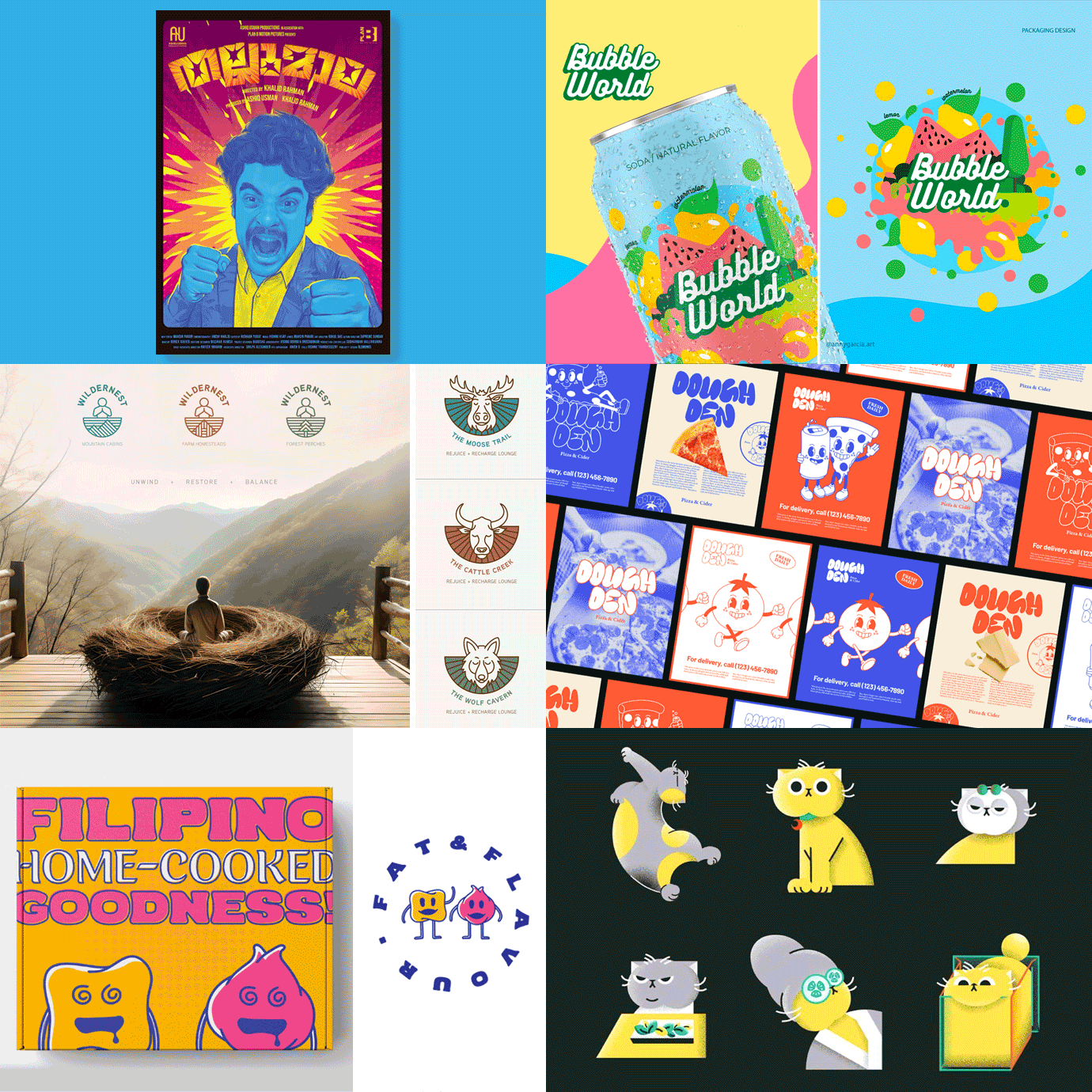
With the support of our sponsors, the RGD is awarding seven scholarships to emerging designers to attend DesignThinkers Toronto this November 2–3.

Student RGDs, Junior Affiliates and Provisional RGDs were invited to post work in response to the prompt, “The Future of Design.” They were also asked to submit written responses outlining why they would like to attend the conference.

Each sponsor selected a winner and have provided $500 for them to use to cover the costs to attend. Sponsors include BLVD, Cinnamon Toast, Davis, Frontier, Fusion Design Group, Office/Bureau and Pound & Grain.

Below, we share their winning work. Click on each project to learn more about it.

Eldhose Kurian Student RGD (awarded by BLVD)

A day in the life at DesignThinkers Toronto

As told by Olivia Montagnese Provisional RGD.

There’s no shortage of things to see and do at DesignThinkers Toronto. We asked Olivia Montagnese Provisional RGD, who has attended DesignThinkers nine times, what a typical “day in the life” at the conference looks like for her.

The doors are open. What are you up to?

On the first day of DesignThinkers, I like to arrive at the venue shortly after registration opens so that I’m able to thoroughly browse the supplier showcase booths and the giveaway table before it gets too busy. My friends try to get there around the same time as me so that we’re able to catch up, talk about what sessions we are excited to see, get breakfast and find good seats. Since there is so much excitement on the first day, arriving early and already having my schedule planned out helps me to feel more calm and ready for the busy day.

And lunch?

During lunchtime, my friends and I usually spend some time catching-up with other colleagues from the industry, and then we usually get lunch in together in the area.

You’ve watched a lot of DesignThinkers presentations over nine years! Any favourites?

There have been so many informative and memorable presentations, but some of my favourites that have resonated with me have been from Anton and Irene, Blake Howard, Emily Oberman, Aaron Draplin, Gemma O’Brien, Jessica Hische, Wade Jeffree and Leta Sobierajski, Vèronica Fuerte and Adam J. Kurtz.

I especially admire Timothy Goodman and Meg Lewis’s work, so it was such a special opportunity to be able to meet and chat with them.

Olivia and Timothy Goodman.
Olivia and Timothy Goodman in 2017.

The conference has more than just presentations, though. What do you do during your breaks and downtime?

During breaks, I usually chat with my friends, and visit the showcase booths, specifically spending a lot of time at the Swipe pop-up to hoard more design books 🤓

The delegate party is always a blast. How do you feel about it?

The delegate party is always such a fun way to end to the first day of the conference. Due to the pandemic, I’ve really missed it as the energy was amazing, and it gave me more time to catch-up with those in the industry that I don’t see often.


Olivia Montagnese (she/her) is a designer and artist based in Toronto. She’s interested in the arts and culture scene and hopes to shift perspectives and create unique and meaningful experiences through her work. She graduated from Humber College’s Graphic Design program in 2018, and currently works as a Designer at q30 design. When not designing, she can be found exploring new cafes and bookstores, taking film photos, curating playlists, and as of recently, taking pottery classes.

Mike Schnaidt talks editorial design and what makes a great creative leader

“Today, the role of an editorial creative director has evolved from when I first started, and that’s what keeps me excited.”

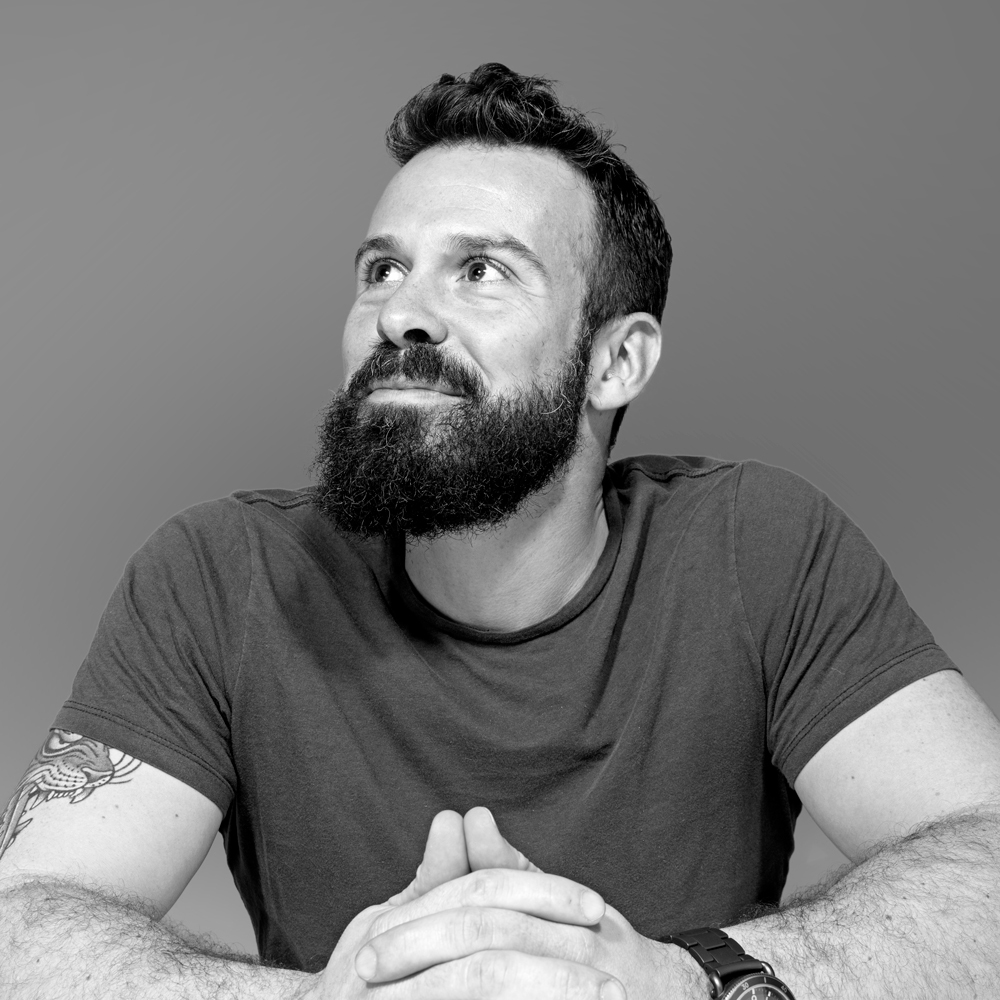
Fast Company Creative Director Mike Schnaidt is an award-winning designer whose resume includes leading design positions at Men’s Health, Popular Science, Esquire and more. In advance of his presentation at DesignThinkers Toronto, we asked him a few questions about his career in editorial design, creating comprehensive brand ecosystems and what it means to be a strong creative leader.

You’ve worked for a number of prestigious publications during your career. What initially drew you to editorial design? What keeps you there?

As a kid, I loved comic books. X-Men. Batman. Deadpool. When I was a design student, magazines appealed to me because the art of sequential storytelling felt similar to the comics that initially stoked my creativity. Today, the role of an editorial creative director has evolved from when I first started, and that’s what keeps me excited. Magazine pages are only one part of a larger design universe that includes events, awards, podcasts, videos and so much more. My editorial experience built a necessary foundation to extend into branding.

That said, your talk is titled “I Never Had a Plan.” Without giving too much away, what can attendees expect from your session?

Speaking of being a kid, I’m a forever student. I love learning. Throughout my career in publishing, I’ve chased jobs based on what I was curious about: pop culture, fashion, science, health and business. I’ve worked alongside some of the best journalists, and learned a lot in the process. And so, I wanted to try my hand at a book. It’s tough! And it’s fun! So if you want to see someone get excited on stage about writing a book, come watch my session. And even if you don’t want to write a book, you’ll grab some takeaways for building a fulfilling creative life.

Fast Company has a massive brand ecosystem, existing across a number of mediums and platforms. Is there a project or campaign that you’ve worked on that you’re particularly proud of? What is it and why?

Our biggest event is the Innovation Festival, and I love seeing it come to life. It brings together everything I enjoy: branding, typography, animation and environmental design. There’s something so cool about seeing your design system come to life in an event space — especially after staring at it on your tiny laptop screen for months leading up to the event. I can’t wait to experience the event this September.

You’ve worked as a creative director for over five years. What do you think makes a great leader in design?

The ability to admit when you’re wrong. Design is a series of decisions, and I don’t always make the right ones. But I will say, “Hey, my bad. I led you down the wrong path. Let’s try it your way?” Nine out of ten times, the work drastically improves when I say something like that. Now that’s a good decision.

What are you most looking forward to about coming to DesignThinkers in Toronto?

There are so many talented speakers that I’m excited to meet. But I’m equally excited to chat with audience members and learn about their creative journeys. Plus: Canada!

Watch Mike’s talk, “I Never Had a Plan,” on November 3 at 11:30 a.m. EST.

Seven scholarships available for DesignThinkers Toronto

Student RGDs, Junior Affiliates and Provisional RGDs are invited to post on Instagram or LinkedIn for the chance to win a $500 scholarship and free registration to DesignThinkers 2023 in Toronto.

Seven $500 scholarships will be provided by industry sponsors BLVD, Cinnamon ToastDavis, FrontierFusion Design Group, Office/Bureau and Pound & Grain. The scholarships will help cover the winners’ expenses to attend the conference. They will also receive a free two-day registration to the event.

The theme for our DesignThinkers 2023 Toronto Scholarship Program is the “Future of Design.”

How to enter

1. Set your Instagram profile to public. Then, post a piece of work that best represents you and your goals for the future (e.g. an area you’d like to work in).

2. For an additional opportunity to be considered by our judges and receive a Scholarship, also post a project on LinkedIn.

3. Hashtag your posts with #HeyRGD and #HeyRGDTOYou must use both hashtags.⁠

4. Complete the application form.

The deadline to enter is September 15.

Winners will be chosen based on the strength of their work and responses on the form.

If you’re interested in sponsoring a scholarship or have any questions, email Hilary at [email protected].

In-person vs. streaming: What’s the difference?

DesignThinkers Toronto is a hybrid event: you can attend in-person or online through streaming. But what’s included in each ticket type? We’ll cover the two options so you can choose the conference experience that’s right for you.

Attending in person

In-person passes allow you to participate in all sessions live at the conference in downtown Toronto. This includes presentations, hands-on workshops and roundtable discussions with other attendees about design-related topics.

In-person attendees can also connect with industry suppliers in our Supplier Showcase; this is a great opportunity to make contacts with vendors who offer products and services to design and creative professionals.

You also have the chance to network and meet new people. Whether you’re striking up a conversation with someone at the Delegate Party or saying hello to other attendees in your row in the theatre, being at DesignThinkers in person allows you to easily connect with others.

And in case you have to step out for a call or want to rewatch your favourites, in-person passes grant you access to the presentation recordings for three months after the conference.

Attending online

Streaming passes grant you access to an online event platform where you can watch presentations live as they’re happening in Toronto. However, streaming attendees are only able to watch presentations; they are unable to participate in workshops or roundtable discussions due to their interactive nature.

The online event platform allows you to chat with other attendees tuning in virtually, but there is no access to the Supplier Showcase or Delegate Party.

Just like the in-person passes, streaming tickets grant you access to the presentation recordings for three months after the conference.

What should you choose?

Attending DesignThinkers Toronto in-person offers more opportunities for hands-on learning and connection with other designers and industry suppliers. If you’re looking for an immersive experience with plenty of options to network and level up your skills, this is a great option for you.

Attending DesignThinkers Toronto online is a great option if you’re just looking to learn from the presentations, are unable to attend in person but still want to invest in your professional development or if it’s the ticket that fits most comfortably in your budget.


Whichever option you choose, attending DesignThinkers Toronto this November 2 and 3 is your chance to explore creativity, the design process, the future of design and design thinking.

Insights from DesignThinkers 2022 in Toronto

“All the ephemera of life, that we tend to ignore, is what graphic designers in film have to bring to life in order to help tell the story. Our job is to support the narrative with strong visuals so that you, as an audience, can 100% believe what you are seeing at any moment in the film.” — Miraphora Lima Co-Founder of Studio MinaLima

Below we share some takeaways from presentations and discussions over the two days of the RGD’s DesignThinkers Conference, held in Toronto on October 27–28, 2022.

Check out more on social media using the hashtag #rgdDT.

“Don’t be afraid to show up for yourself. Don’t be afraid to listen and celebrate that unique voice of yours. To speak with authority based on your own lived experiences and your own stories. But more than that, don’t be afraid to draw boundaries, slow down and recharge, because some of us are too busy speaking up for others that we forget to speak up for ourselves.”  — Mel Sutjiadi RGD, Founder of ARToverMATTER

“There was this expectation that if you’re a young designer, you should challenge conventions but for me it was much more nuanced than just following a rule or breaking a rule. I had classmates that operated on each end of that spectrum and I felt like I operated in the middle and you could call that an inflection point — the moment in which you changed the direction.” — Eric Hu, Independent Creative Director & Typographer

“Whether it’s a song that becomes your anthem or power posing or breathing exercises — whatever it is, it’s great to find tools that work for you and help you out in situations that may otherwise make you feel like you’re out of control.” — Elana Rudick RGD, Founder & Creative Director of Design Is Yummy

“As designers, everything we produce, even the most sustainable products, have a negative impact on the planet, so the best thing to do is to reuse stuff especially in the world of food and beverage — reuse packaging and create strategies to encourage customers to do so.”  — Mauro Porcini, Chief Design Officer & Senior VP at PepsiCo.

“Personal projects are a way for me to connect with myself. To understand how I tackle the creative process and all that happens in my mind when I’m doing or navigating all those ups and downs of a project” — Paloma Rincón Rodriguez, Visual Artist

“Social media profits are an alternative form of capitalism called surveillance capitalism. They have found a loophole where you don’t have to pay to use an app but you pay with your attention, time and data. And within the existing economic system, companies cannot do the right thing because they would lose enormous amounts of money. This is a change that will take years to take effect. But until we have policies and regulations that help technology work for us, we, as creators and people building the technology, can have an effect. We have to fix this at the root of the problem.” — Bethany Sonefeld, Design Manager, Duo Security

“Often when you’re working across different teams, the languages that folks use are different but everyone is saying the same thing. And so you can have brand designers in a room with developers and they’re saying the same thing but not understanding each other. I call this “Talking in Time Horizons”. A designer would talk to an engineer and the engineer would talk to a product manager. And they’re all right. It’s just a different Time Horizons. A designer might have an idea but that idea is a six-month down the road idea — a big idea. The engineers are talking about an idea for tomorrow. And they’re both right. It’s just the Time Horizon that is different.” — Gene Lee, Vice President at Autodesk

Over 1600 creatives came together for the DesignThinkers Conference in Toronto

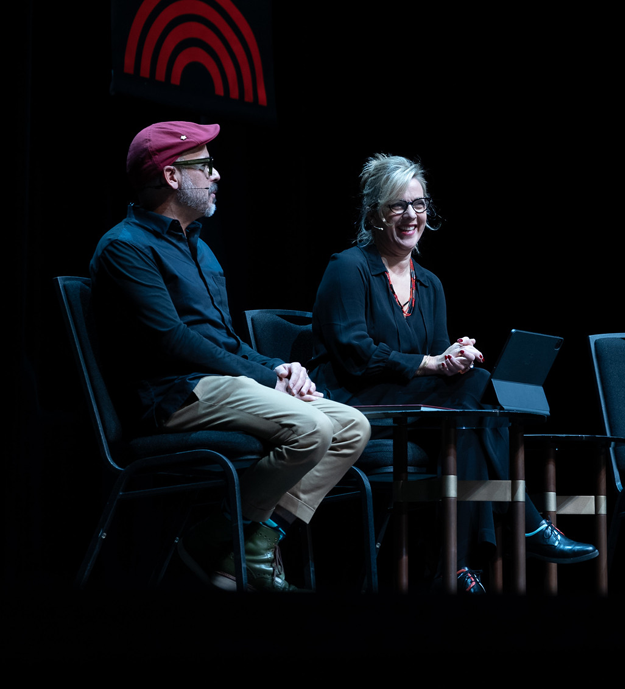
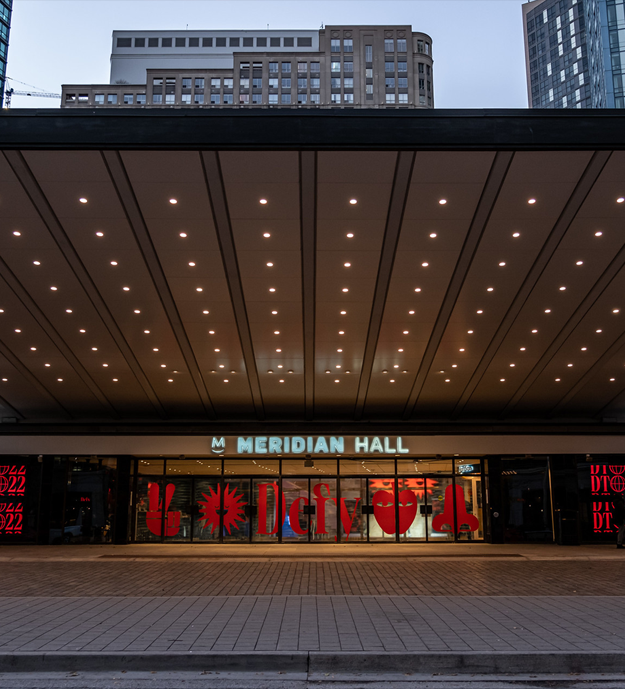
While Laurie Rosenwald held a “top secret” workshop on analog lettering, some speakers spilled the beans in the Never Have I Ever session — on October 27 and 28 creatives from across Canada attended the 23rd annual DesignThinkers Conference at the Meridian Hall in Toronto.

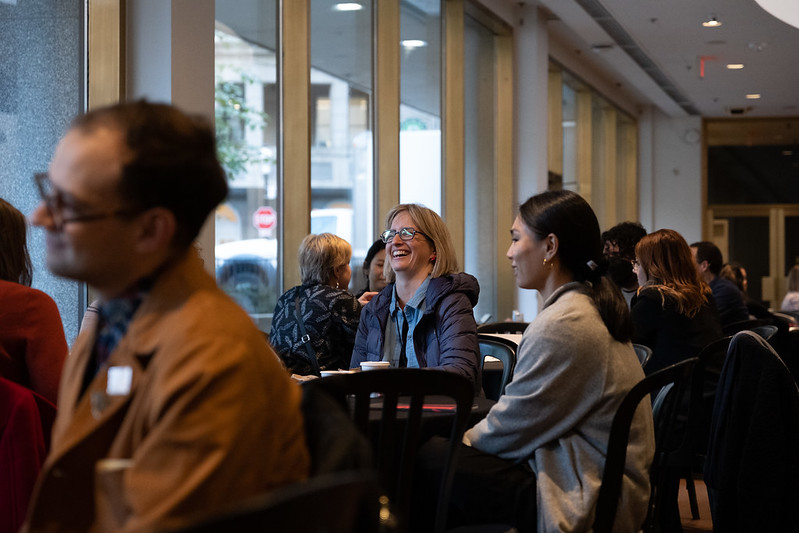
In addition to having the option to choose from four different streams of talks and workshops and engaging in honest conversations about the ever-changing world of visual communication, this year’s delegates were clearly thrilled to meet and connect with their peers in person after three years. The conference also had an option for online live screening for those who preferred to attend from their home or office.

All delegates have access to presentation recordings on the event platform, Pheedloop until the end of January, after which time they will be made available to all RGD Members in the Members-only section of the RGD website. You can still register here to get access to the recordings on Pheedloop.

As a precursor to the conference, on October 26, three guided tours to top creative studios in Toronto were held featuring King UrsaContext CreativeNurunlg2JackmanSid LeeVanderbrand, BLVD and Sovereign State.

DesignThinkers 2022 Day 1 Images

Day 1 of the Conference featured talks from Miraphora Mina and Eduardo Lima, Eric Hu, Sara Wachter-Boettcher, Paloma Rincón Rodriguez, Kevin Hawkins, Elana Rudick RGD, Maurice Cherry and Mauro Procini, among others. Speakers discussed topics that included accessible design, creative AI, human side of innovation, telling stories through design, defying self perception and more. The day also featured panel discussions on building in-house team and in-house client management and workshops by Laurie Rosenwald on lettering and Robert Smith RGD on SWOT.

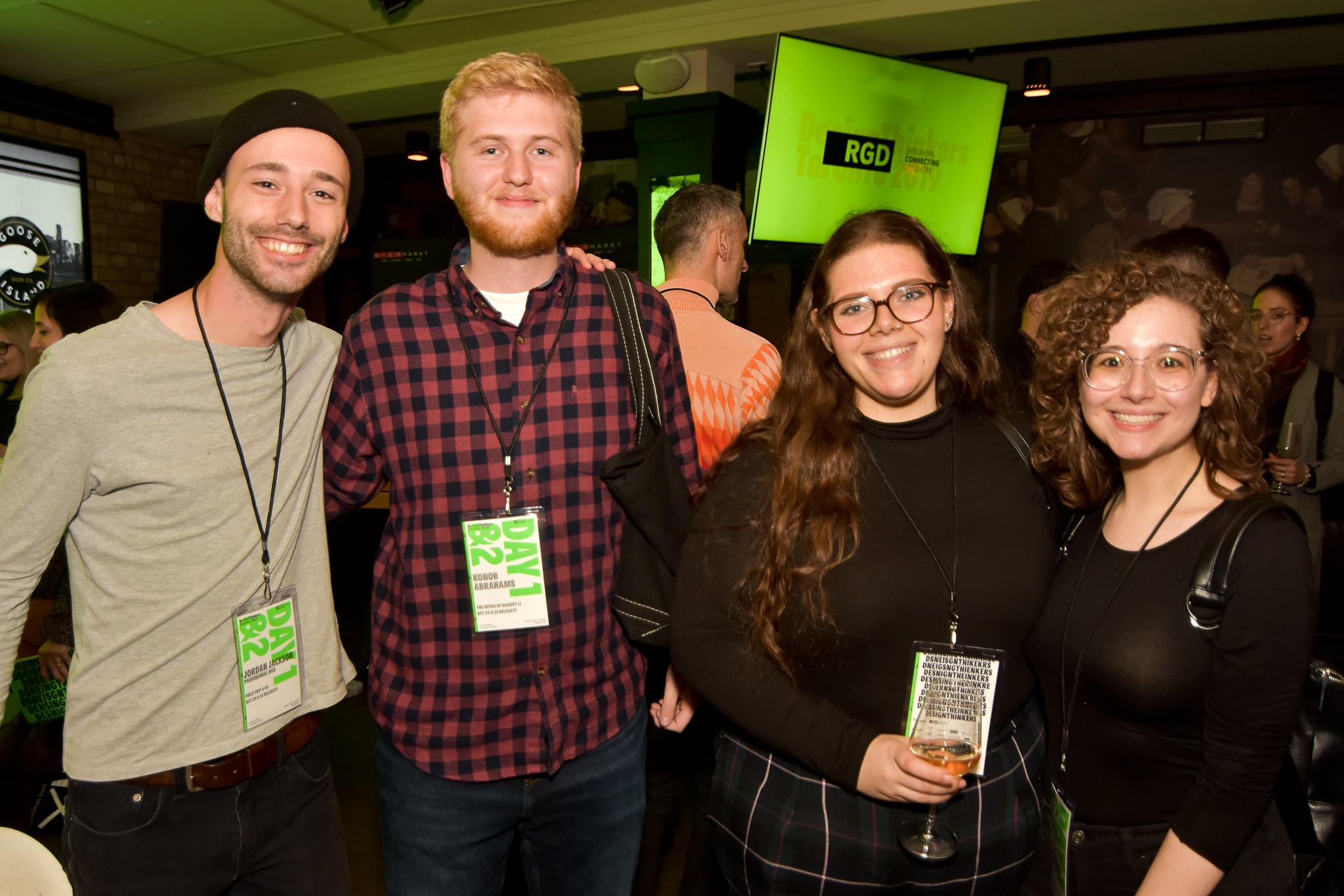
Day 1 finished with a Delegate Party at Bier Markt, where delegates and speakers were able to connect over some delicious hors d’oeuvres and drinks and have much-needed in-person conversations.

DesignThinkers Toronto photos

Day 2 was packed with just as much defiance and creativity. Morag Myerscough, Alex Center, Matteo Bologna, Teresa Moses, Gene Lee, Samuel Proulx, Christine Caruso and Lionel Gadoury RGD and many more took the stage to discuss topics such as embracing change, design with an abolitionist mindset, creative confidence, breaking free from familiar, defying boring and more. The day also featured a Never Have I Ever session with Matteo Bologna, Morag Myerscough, Jolene Delisle & Alex Center hosted by Julian Brown RGD and workshops on lettering by Ying Chang and improv for designers by Diana Varma RGD.

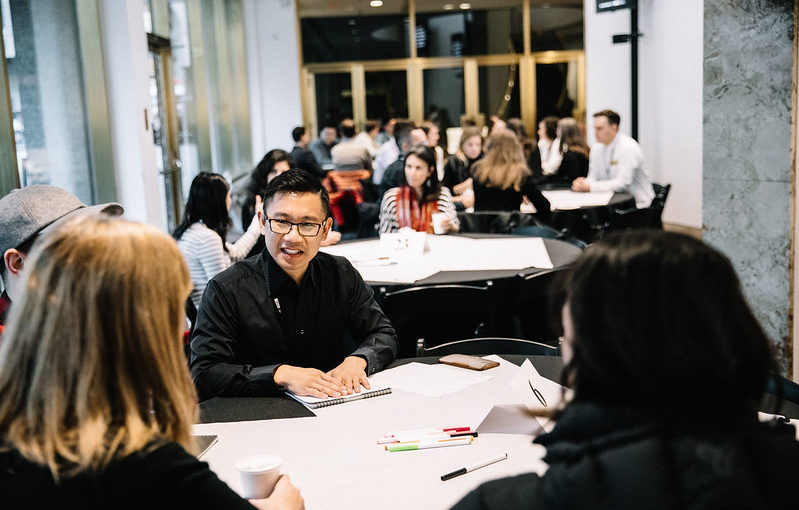
In addition to the regular conference sessions, delegates had the opportunity to get their books signed by MinaLima, Mauro Procini, Laurie Rosenwald, Sara Wachter-Boettcher, Silas Munro, Robert Smith RGD, connect with peers during breakfast and lunch at roundtable discussions and to see, feel, sample, test and consider the latest products and service offerings available to our industry in the Designer Marketplace. Dominic Ayre RGD also held a lunchtime typography workshop which was packed with attendees on both days.

Delegates and speakers were invited to share thoughts about the DesignThinkers Conference on social media using the hashtag #rgdDT.

Thank you for our volunteer photographers Andrew Terwissen RGD for day 1 and Maninder Singh RGD for day 2 of the conference.

From student to professional: Attending DesignThinkers for 16 years

“It’s too easy to live and work in your bubble, whether you're conscious of it or not. DesignThinkers is a tangible way to break out of it.” — Victor Szeto RGD

Victor Szeto RGD, Creative Director at Green Living Enterprises, first attended DesignThinkers 16 years ago. With many conferences under his belt, Victor shares about his favourite talks over the years and what you should keep in mind if you’re attending your first conference.

You’ve been attending DesignThinkers for 16 years now! Where were you in your career when you first started attending?

I want to say that my first DesignThinkers would’ve been while attending design school at York/Sheridan, but I still have my old notebooks and it only dates back to 2006. I know I skipped a year or two attending, so maybe I was still in school or shortly after I graduated? In any case, it was fun to look back at all the themes throughout the years and all the effort into changing it up every time.

The design industry and the profession has changed a lot in the last decade and a half. How have you seen these changes reflected over the years at the conference?

The most noticeable difference for me is the range of micro-design disciplines the industry entails. Some of them are technically/software-based, but the ones I follow most are changes in the impact that design has on social change, behaviour and the planet. Given how politics have also gone bonkers over the last decade, I’ve noticed how design and politics have been intertwined more than ever. Going to design school, it never occurred to me how design could be a form of activism, but I see how it gets weaved in more and more over the years and I think it’s important that we recognize the significance of the work we do.

Do you have a favourite memory/speaker/session from DesignThinkers?

My favourite occurrences are when I have no preconceived notions of the speaker or session, and I leave feeling inspired and activated. A few that stood out for me in no particular order:

  • Nancy Duarte from 2008 (changed my opinion about Powerpoint!)
  • Jake and Pum Lefebure of Design Army from 2012
  • Andrew Zolty of BREAKFAST from 2014
  • Albert Shum of Microsoft from 2016
  • Jessica Bellamy of GRIDS from 2018
  • The various sessions where I got to introduce and/or interact with the speakers between 2019-2021

What keeps you coming back year after year?

It’s too easy to live and work in your bubble, whether you’re conscious of it or not. DesignThinkers is a tangible way to break out of it. For me, it’s like a forced break from the daily work grind without it counting towards vacation days, I’m listening to industry experts who I may not have otherwise met or heard of, and I get to geek out on specific topics with my people that I don’t typically get to geek out on in the office! The other big reason I keep coming back is to be inspired by speakers who are passionate about their projects and how it affects and shapes the world we’re living in.

What would you say to someone considering attending for the first time?

It’s easy and understandable to become overwhelmed by the volume of choices and sessions. Doing a little background research on the topics and speakers will help make decisions easier, but also go with an open mind and a have-fun attitude. Some of the best sessions I’ve been to were completely random selections where I had no expectations at all.

What are you most looking forward to at this year’s conference?

The last two years were a wonder in accessibility as everything went virtual, the content was spread out over two weeks and geography wasn’t a barrier. This time, I’m looking forward to concentrating all of that back to two days, and connecting with the people who I was only able to see on screen in real life!

The value in attending DesignThinkers as a design educator

“Students attending the conference, studio tours and social events get excited about the design field and their work, and inspired to pursue new paths in design they may not have considered before.” — John Baljkas

John Baljkas (top left) is a Professor at Conestoga College. For years, John has attended DesignThinkers Toronto with his students. Below, John shares about why he finds the conference so valuable for himself as an educator and the emerging designers he teaches.

You’ve been attending DesignThinkers for over 10 years! Where were you in your career when you first started attending? 

I attended DesignThinkers for the first time when working in design studios in Toronto. At the time, I was two years into my career and was inspired and motivated to learn more about design practices, and specific speakers, their work and have new perspectives and approaches for my own design practice. There were gap years in attending the conference, but for the past 10+ years as a full-time faculty member, the value of DesignThinkers for myself and students is invaluable for defining future careers.   

How do you find DesignThinkers inspires or informs your work as an educator?

The presenters at DesignThinkers often show a balance of design skills and empathy in their projects. As an educator, this is inspiring and informs and expands our collective understanding of design practices in relation to other disciplines and communities. I’ve seen many talks that discuss design in relation to creative goals, business, accessibility, sustainability, cultural artifacts, social justice and technology. The curation of speakers from different parts of the design community offers different perspectives on the roles designers have in businesses, communities, and education.

Do you have a favourite memory/speaker/session from DesignThinkers?

I’ve had a lot of ‘aha’ moments over the past decade. For me, the great part of the conference is the ability to see a speaker’s talk and then talk to them after their presentation or contact them after the conference. It’s also a great time to meet up with former colleagues!
What keeps you coming back year after year?

I keep coming back to DesignThinkers for the speakers and sense of community built by the conference. There’s such a great energy in the theatre during the in-person/live talks. Personally, I enjoy hearing peoples’ perspectives on design and seeing their work.

What would you say to another design educator considering attending for the first time?

As design practices are continually changing, DesignThinkers and associated events are extremely relevant to maintaining a current [and up-to-date] curriculum. Students attending the conference, studio tours and social events get excited about the design field, their work, and inspired to pursue new paths in design they may not have considered before.

If you could sum up the experience of attending DesignThinkers in one word, what would it be?

Relevant.

Designing for digital with Lauralee Sheehan

“I always look at digital design as a way to augment and support IRL connection.” — Lauralee Sheehan

Lauralee Sheehan is a design thinker and digital addict, but above all, an artist. In advance of her session at DesignThinkers Toronto, we asked her a few questions about her talk, switching careers and how you can stay grounded when the rate of change in the industry gets overwhelming.

You worked in the music industry for a number of years before moving into design. What prompted the switch?

I was realizing that experience design was something we were doing in the band. Digital and design were becoming a huge part of band life in 2015ish (digital posters, vid’s, web assets, social media, etc) and that opened up a lot of doors. Coming from an extremely creative and wild industry like music, I had an edge in how I thought about digital experience design and the concepting that goes along with it. AND … I needed a break from music. Sometimes you have to break up with your passion to rediscover and reimagine it for yourself.

Your talk is titled, “Design and Create Like an Indie Band, Circa 2008.” Without giving too much away, what can attendees expect from your talk?

Around 2012, the music industry was drastically changing with major digital disruptions. It maybe started with Napster back in the day and then MySpace, etc. I think musicians had to think about their art in a whole new way, and that meant from process to format to sustainability to intent. The digital and design space seems to be going through something similar now, with online content and consumption blowing up, as well as the impact of design communication. There are a lot of lessons to think about when being on the producing side, so I will give away some of my key lessons that helped me weather major disruption in music and keep my art process agile and responsive.

A common criticism of our hyper-digital world is that our connection on a human level gets lost. Do you agree? How can designers create in a way that’s human-centered yet digitally compelling?

This is a great, big question. And one that I think about a lot, having a digital company. Digital is great, but it’s not great for everything, always. Kind of like in film, I’m always trying to figure out how to “break the fourth wall” in our digital builds and design systems/visual communication. My team is really fantastic about what the experience will be for the user, and we think about how to layer in and embed connection, even in an asynchronous experience. It’s not easy and especially now, there is a lot of digital fatigue, but I always look at digital design as a way to augment and support IRL connection.

What would you say to someone who’s feeling overwhelmed about the amount of change and adaptation the industry is asking of us?

Keep your creative vision close to your heart and mind always. Through massive change, you can easily forget about your unique design style and perspective. Use your vision as a bit of an anchor, but also as a point of iteration. Maybe there are things you can try that you didn’t think about before that don’t take away from your design perspective but maybe, in fact, add more to that perspective and push you out of your comfort zone.

What are you looking forward to about coming to DesignThinkers in Toronto?

Everything! But mostly being in the room with people who really, really <3 design. There’s a buzz that happens when you gather to think about things, big and little, and DesignThinkers Toronto is always such a classy and thought-provoking space to do so!

Catch Lauralee’s talk on October 27 at 11:00 a.m.

Silver Sponsors

Media & Community Partners